
Cost-of-living pressures
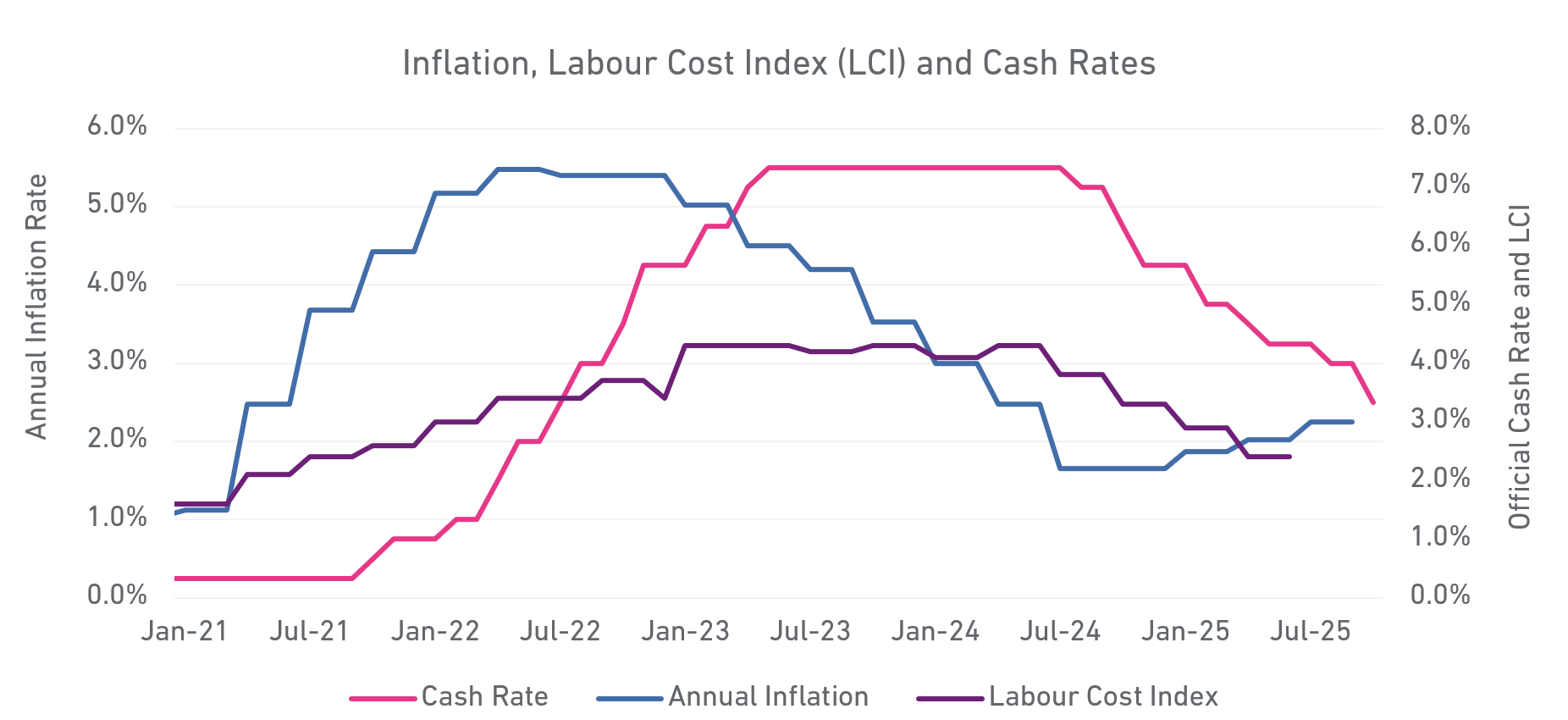
Over the last four to five years, NZ households have faced sustained pressure from escalating living costs driven by persistent inflation and a rapid rise in interest rates.
Inflation surged to a peak of 7.3% in April 2022 and remained elevated through to the end of the year before gradually easing to 2.2% by mid-2024. The decline was largely due to the Reserve Bank of New Zealand (RBNZ) aggressively raising the official cash rate from 0.25% to 3.00% in the 12 months to August 2022, and then to 5.50% by May 2023.
While this helped to slow inflation, it resulted in increased repayment costs for borrowers. Mortgage interest payments more than doubled over three years, and rents continued to rise, leaving many households spending over 40% of income on housing. While wage and salary growth initially held steady, it failed to keep pace, creating a gap that eroded real incomes and amplified affordability concerns, and has since fallen to 2.4%. In 2025, the RBNZ shifted toward easing monetary policy to stimulate the sluggish economy, and just recently cut the official cash rate to 2.5% in October. While inflation has fallen from its peak and despite some relief from lower interest rates, the cumulative effect of high housing costs and subdued wage growth means financial stress remains a defining feature for households.
 Using Experian’s delinquency data across multiple credit products, we conduct a deep dive into consumer demographics to identify segments experiencing the highest and lowest levels of financial stress resulting from New Zealand’s ongoing cost-of-living challenges.
Credit cards
Overall credit card delinquencies are declining since mid-2024, although there was a brief period of rise in December and January. The decrease in the cash rate by one percentage point during 2024 has helped soften that blow and further decreases have led to the improvement in delinquency rates. 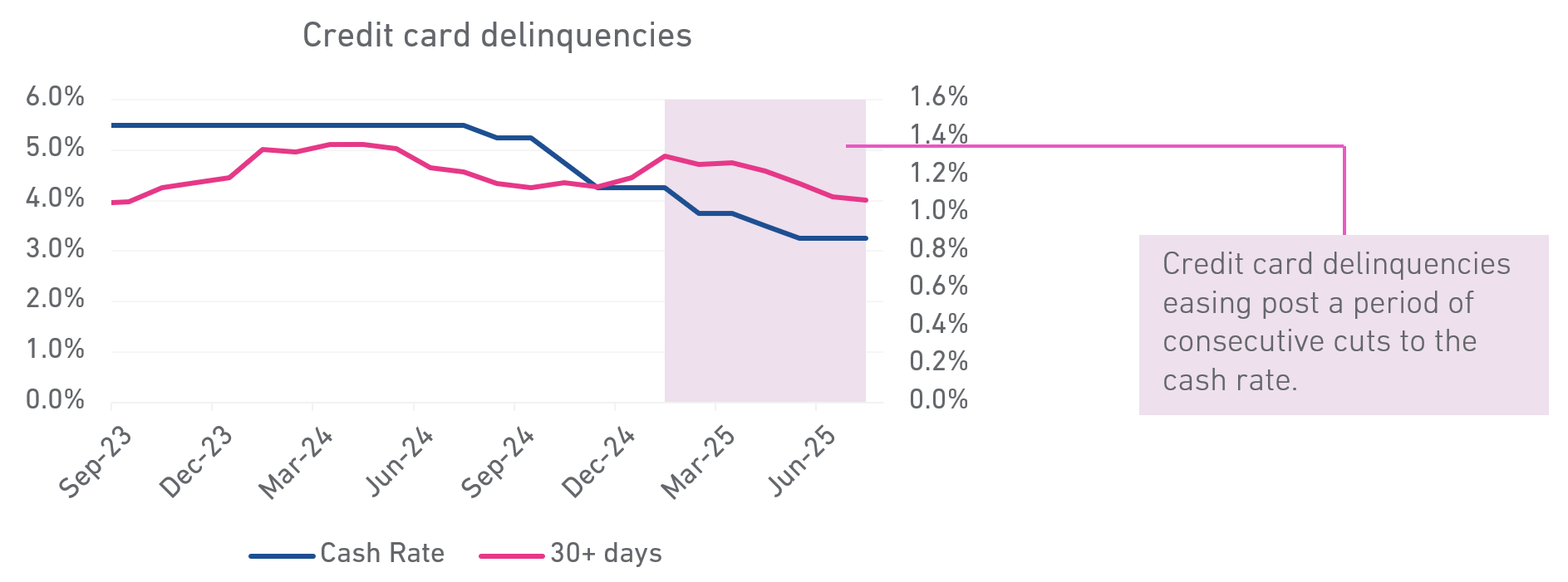
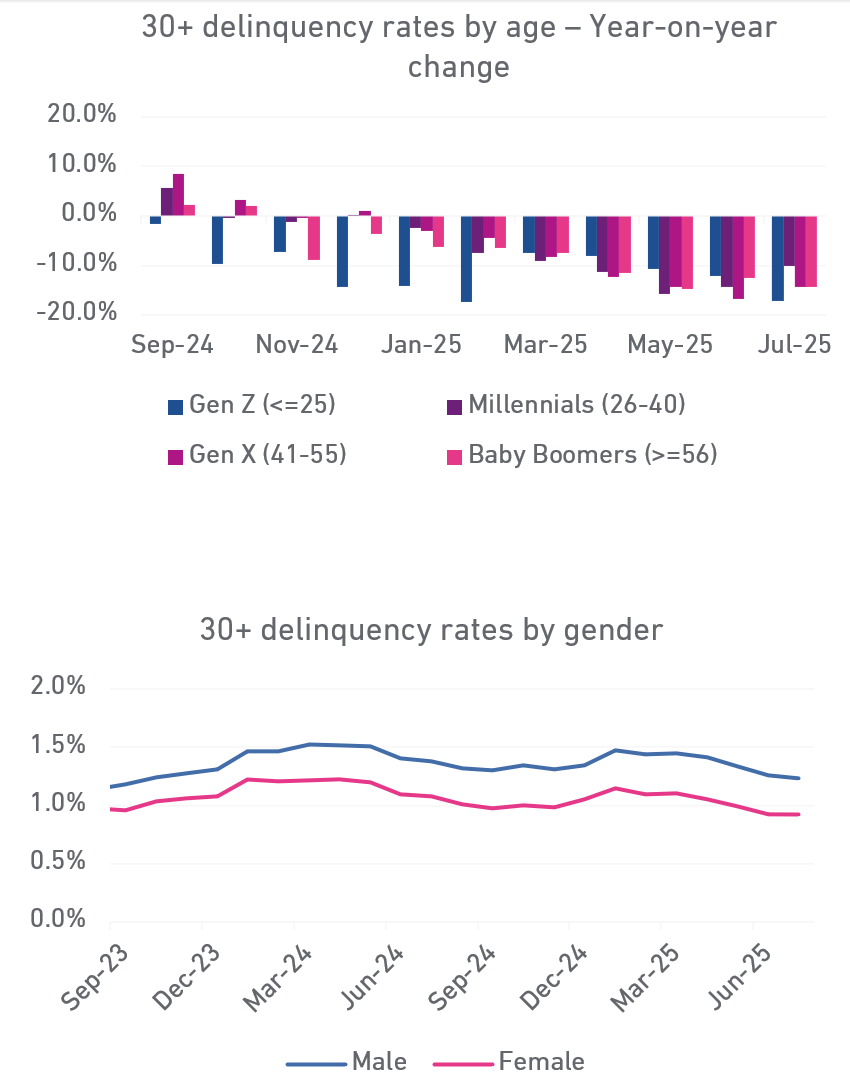
Gen Z and Millennials (those aged under 40) are the most sensitive to interest rate changes when paying off credit cards on time. During the back-half of 2023 when costs remained elevated, both age groups had the highest absolute and relative increase in delinquency rates. Likewise, in the last year Gen Z delinquencies have improved earlier and at a higher rate than other age groups.
Females fare better than males in both 30+ days and 90+ days delinquency rates. Females have improved marginally since late 2023 relative to males, reducing late payment rates and widening the gap between their counterparts from 0.21% to 0.33%.
Higher stress in Auckland and metropolitan regions
Metropolitan areas consistently had higher delinquency rates than regional areas, with the gap widening during the peak period in May 2024 and narrowing slightly afterward. This was particularly pronounced with rates for severely delinquent consumers, paying 90+ days late (metro at 0.51% vs regional at 0.39%). One likely explanation for higher rates in metropolitan regions is greater rental costs and higher household debt levels in urban centres, making it harder for consumers to absorb interest rates increases.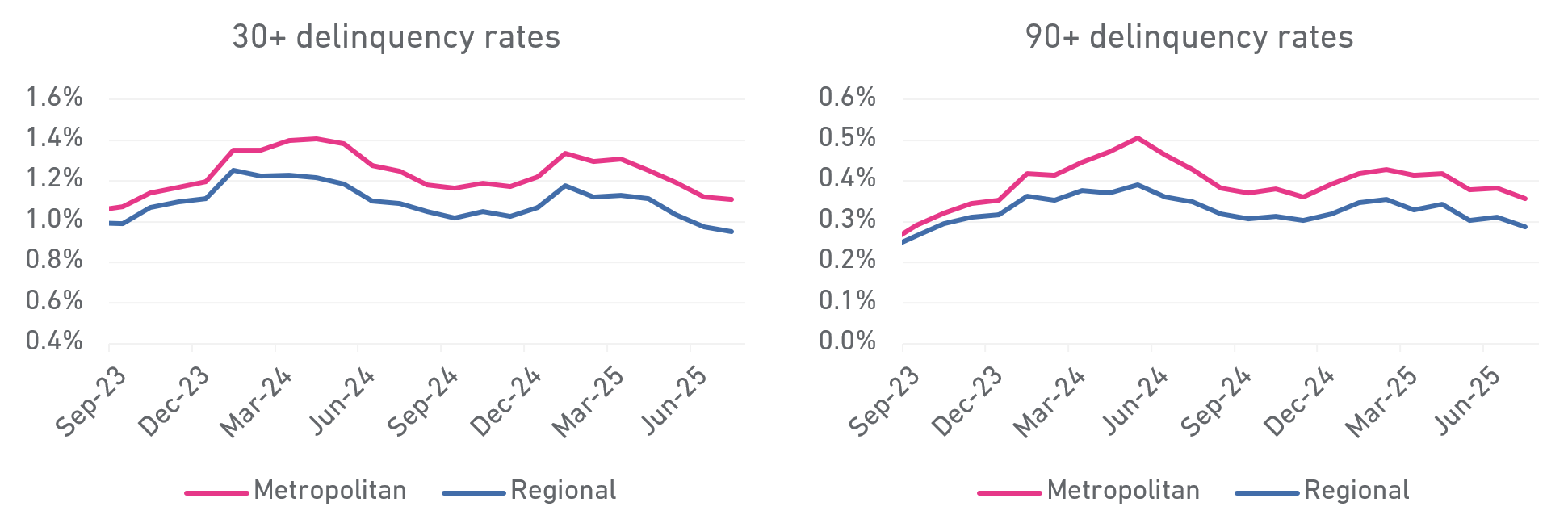
Auckland is the primary driver of this difference, accounting for nearly one-third of all credit card accounts in New Zealand. It consistently records the highest delinquency rates among all regions, averaging about 0.3 percentage points above national level (excluding Auckland).
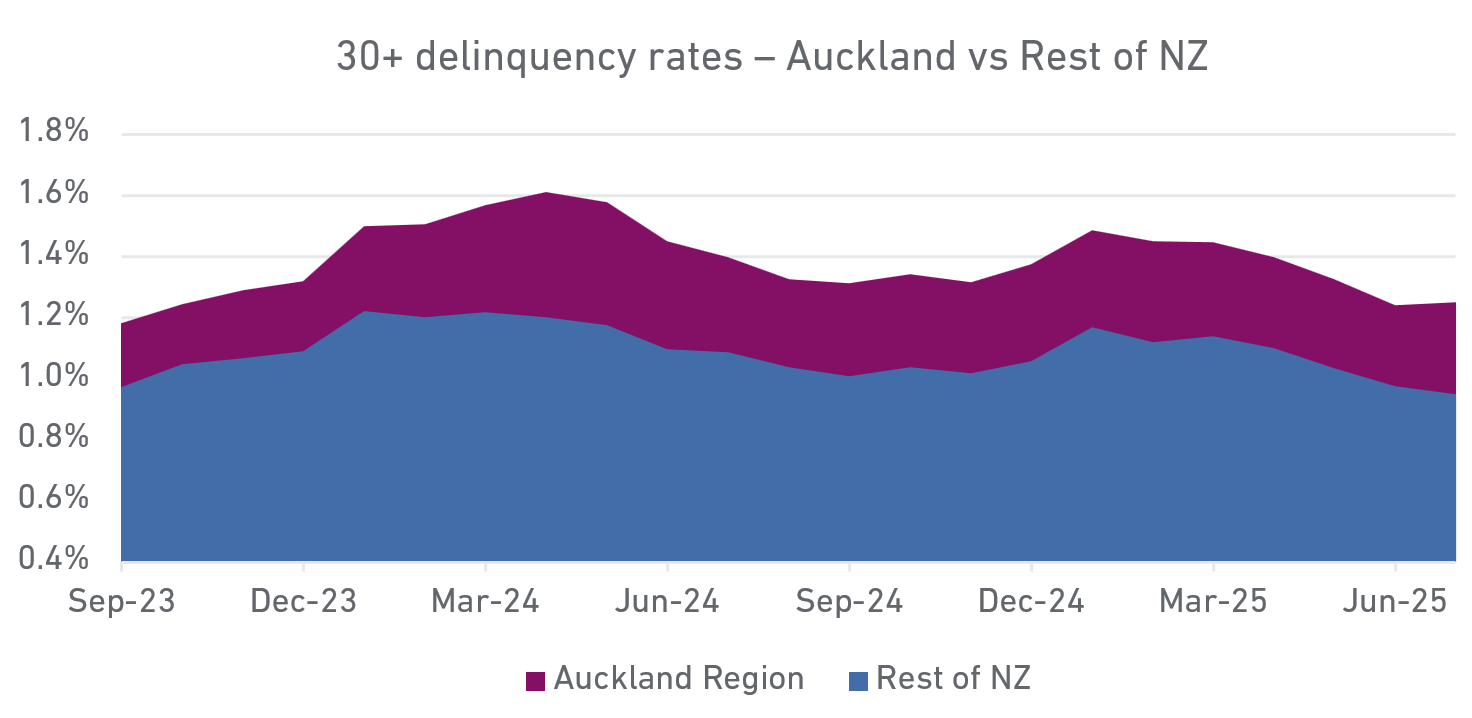 At its peak in April 2024, Auckland’s delinquency rate reached 1.61%, compared to just 1.2% across the rest of the country.
The next highest regions were the Waikato Region and Bay of Plenty (peaking at 1.4%), followed
by Northland region at 1.31%.
Home loans
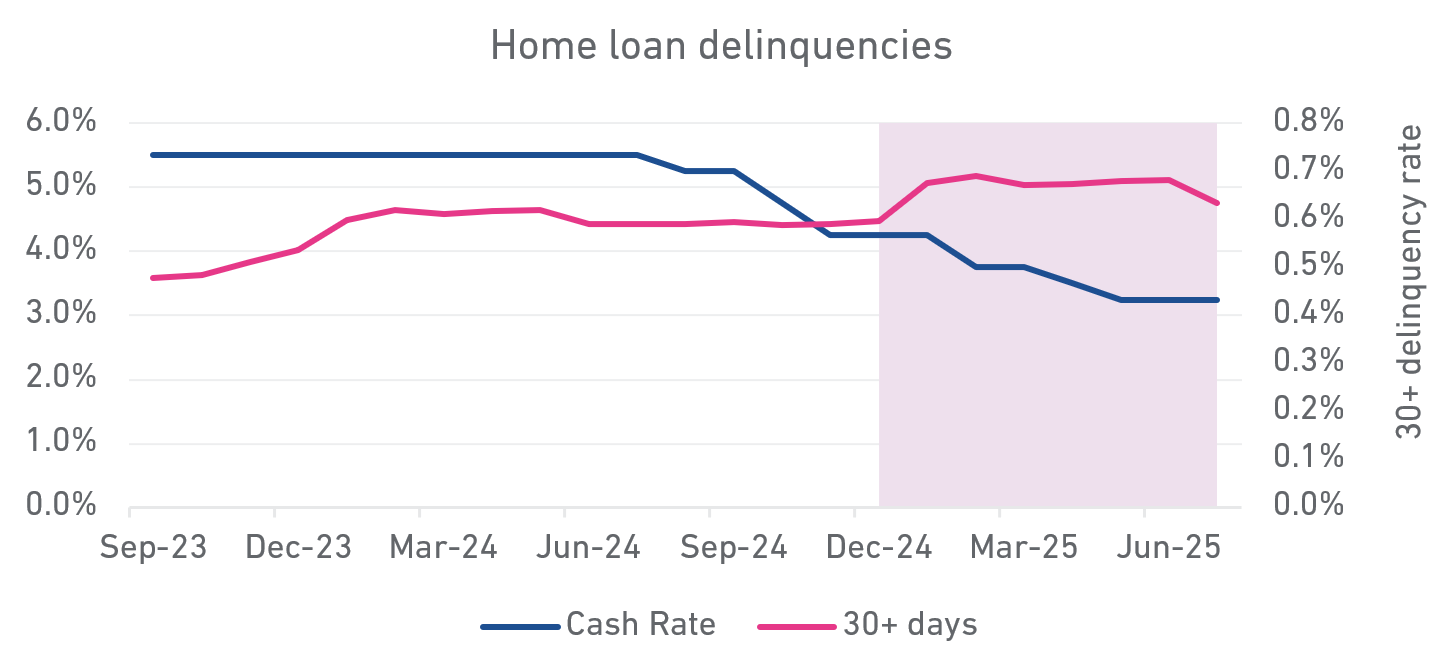
At a time when inflation and interest rates were elevated during 2022, house prices fell by as much as 16% in some regions. The result has been an increase in mortgage arrears over the last two years. Despite multiple cuts in the cash rate, 30+ day delinquencies jumped in 2025 reaching a long-term high of 0.69%.
Gen X and Baby Boomers consistently have the highest delinquency rates, peaking at 0.75% in June this year, followed by Millennials (0.61% in June) who have had the greatest deterioration year-on-year. Cost-of-living pressures and rate rises are more likely to have impacted Gen X and Millennials who are most likely to hold bigger mortgages while also juggling childcare and other family related expenses.
Males are more delinquent than females when it comes to mortgage repayments and this gap appears to be widening. Over the last 12 months males have had a higher year-on-year increase in delinquency rates – as at July males are 0.79% delinquent compared to females at 0.54%. 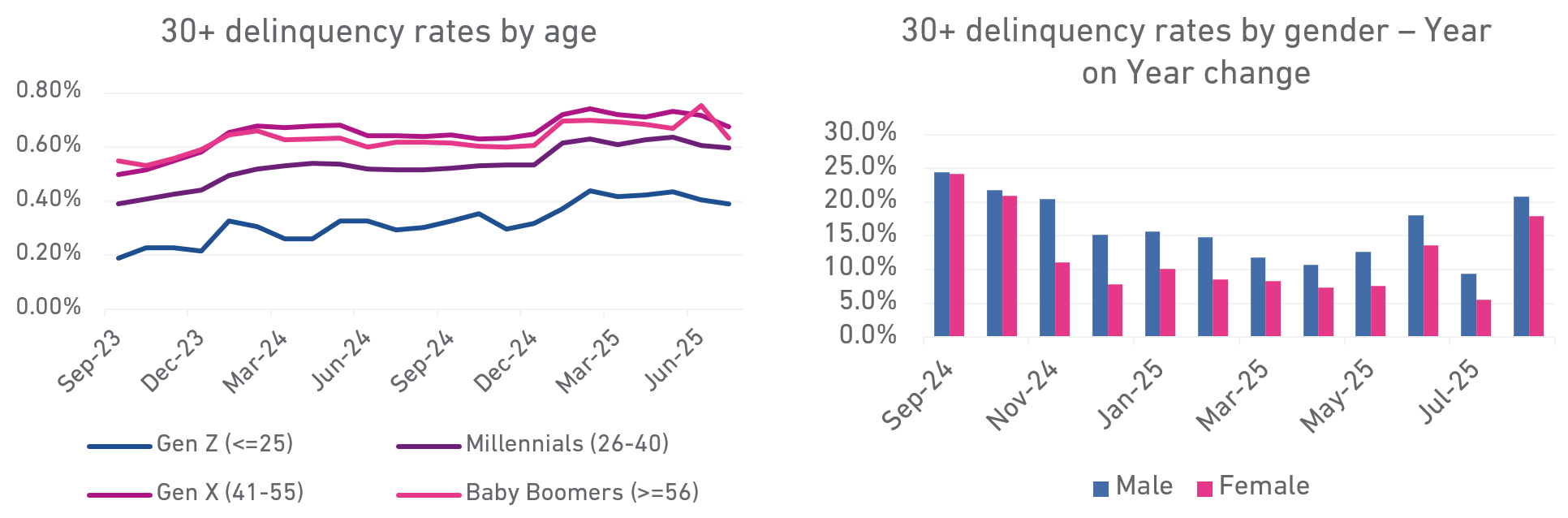
Metropolitan and regional areas
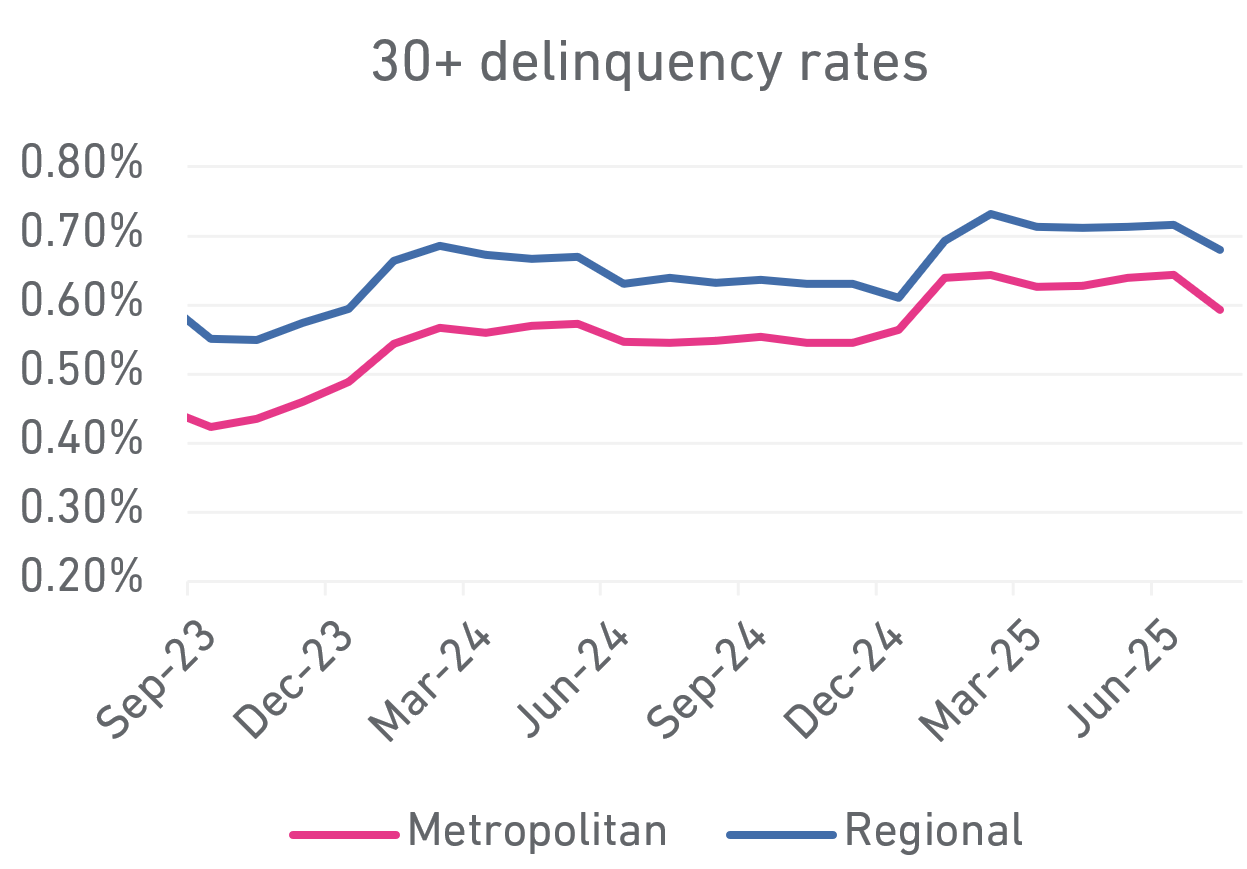 Regional areas in New Zealand show higher home loan delinquency rates than metropolitan areas, despite having lower housing costs. This pattern is likely explained by economic and structural factors rather than debt levels alone. Regional households may face greater income volatility due to reliance on industries like agriculture and tourism, which are sensitive to seasonal and market fluctuations.
Additionally, average incomes are typically lower for regional borrowers, making them more vulnerable to interest rate increases or unexpected expenses. Property markets in these areas are less liquid, so selling a home to resolve financial hardship is slower and more difficult. Combined with fewer refinancing options and limited access to credit products, these factors contribute to higher delinquency rates in regional areas, even though their overall debt levels are lower than those in metropolitan regions.
Recent mortgage stress in the Gisborne region
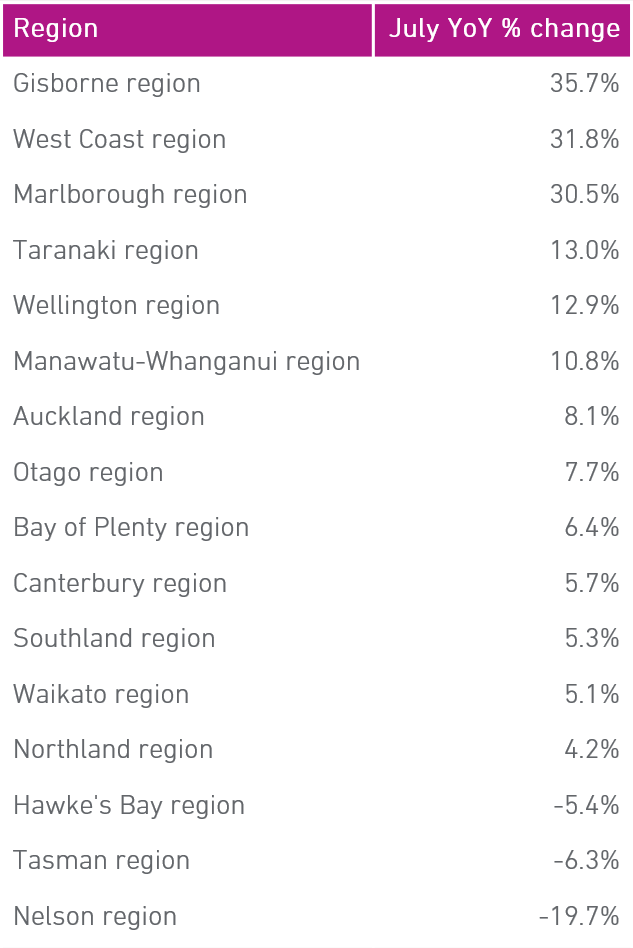
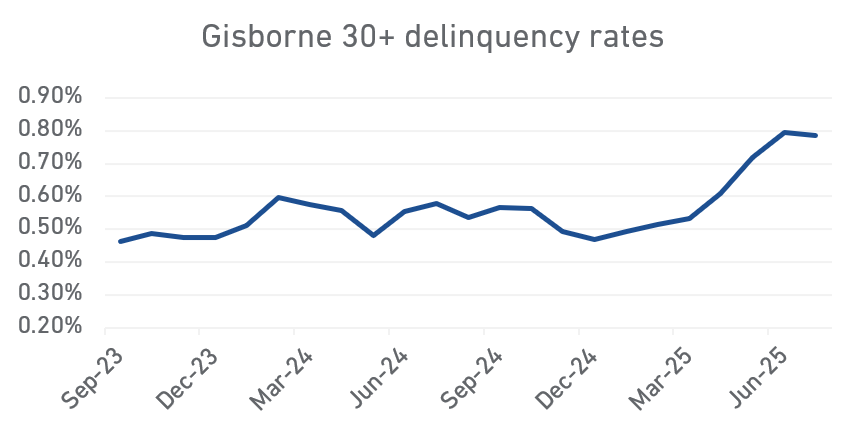 The Gisborne region has seen a very sharp and recent rise in 30+ day mortgage delinquencies. The delinquency rate has increased from 0.53% in March to 0.79% in July and have had the highest increase across all regions year-on-year.
The West Coast region and Marlborough region have had similar year-on-year increases but the deterioration has been at a gradual rate over the last 12 months.
Personal loans
Personal loans delinquencies have fluctuated between 4% and 5% over the least two years, even as the cash rate fell sharply in the last 12 months. This is not unexpected as it is more common for personal loans to be fixed rate, meaning cash rate changes don’t immediately affect repayment amounts. Personal loan delinquency trends are more likely to be influenced by household budgets and employment conditions.
Historically, males have exhibited lower delinquency rates on personal loan commitments compared to females. However, recent trends indicate a notable improvement in female repayment behaviour, bringing delinquency levels in line to those of males.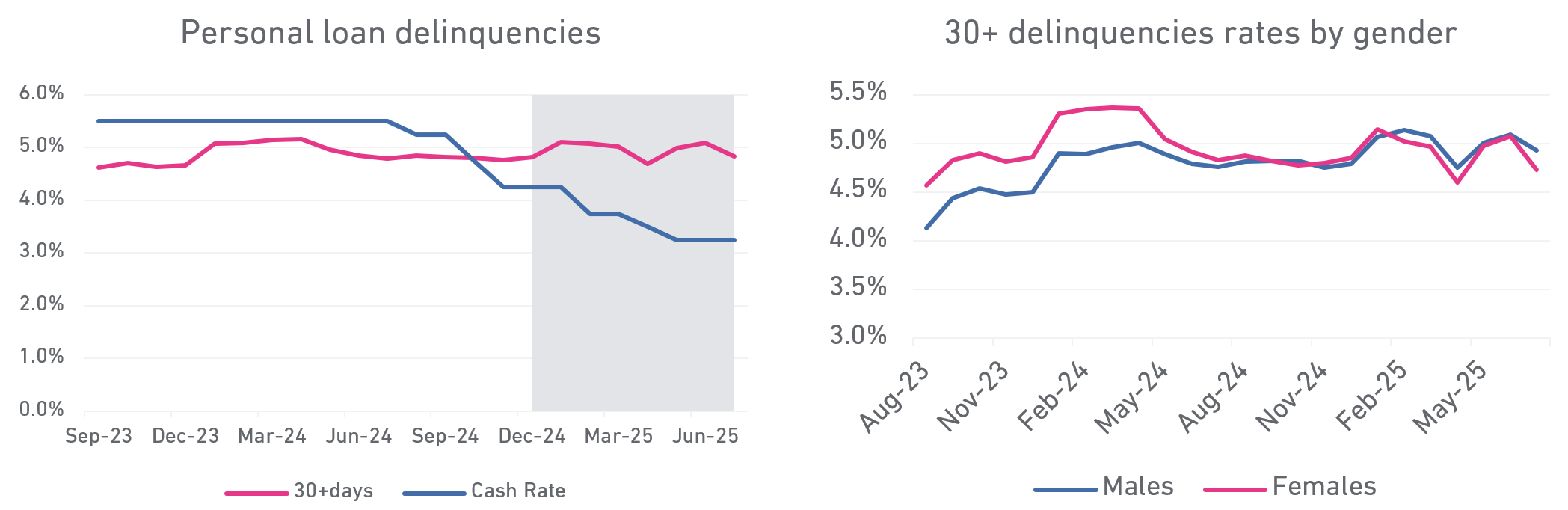
Sustained stress in the Hawke’s Bay region
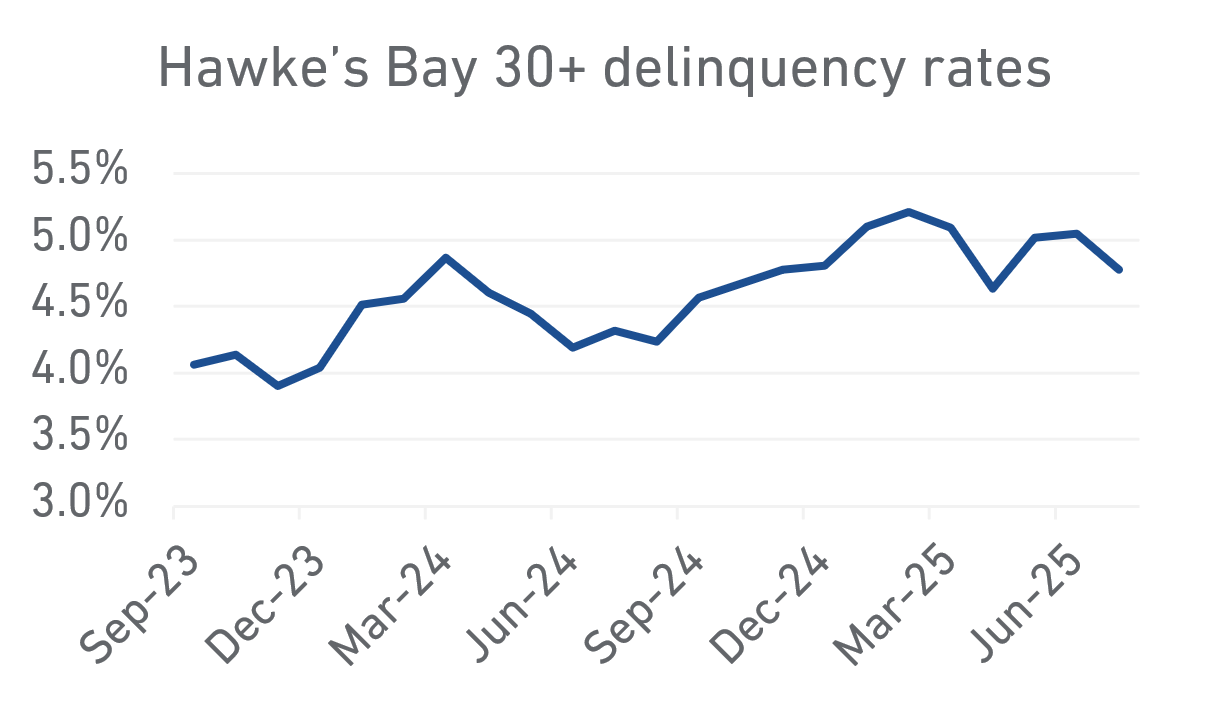 Hawke’s Bay has seen consistent year-on-year increases in personal loan delinquencies, demonstrating persistent financial stress for households. The region is still recovering from Cyclone Gabrielle (2023) and subsequent flooding in 2024, leaving borrowers with significant debt burdens. The region is also facing lower productivity than the national average and lower household incomes, further reducing financial resilience.
How can we help?
Market insights provide our clients with a deep understanding of their competitive landscape, customer behaviour and market dynamics. By leveraging internal data, industry benchmarks, and external market intelligence, these services can help uncover trends, identify growth opportunities, and inform strategic decision-making. Turn market intelligence into competitive advantage with data-driven insights that drive growth. Contact us to find out how.
Like what you’re reading? We release the Experian Business Pulse Monthly each month and features a Spotlight topic, much like this article. To get the latest reports directly to your inbox, be sure to subscribe.
Contact Us
Disclaimer: This report is provided by Experian Australia Pty Ltd general information and it is not (and does not contain any form of) professional, legal or financial advice. Experian and its related bodies corporate make no representations, warranties or guarantees that the information (including links and the views / opinions of authors and / or contributors) contained in this report are error free, accurate or complete. You are solely responsible and liable for any decision made (or not made) by you in connection with the information contained in this report. Experian (and its related bodies corporate) exclude, to the extent permitted by law, all liability for any and all loss, cost, expense, damage or claim incurred by a party as a result of or in connection with (whether directly or indirectly) this report or any reliance on the information in this report or links contained within. Nothing in this disclaimer excludes, restricts or modifies any rights or remedies that cannot be excluded, restricted or modified under applicable law. Experian and its related entities own, or are licensed to use, the intellectual property rights in this report and its contents. Except as permitted by law, the contents of this report must not be reproduced, modified, distributed or republished without Experian’s prior written consent.
Experian and the Experian marks used herein are service marks or registered trademarks of Experian or its related entities worldwide. Other product and company names mentioned herein are the property of their respective owners.