Productivity-driven consolidation
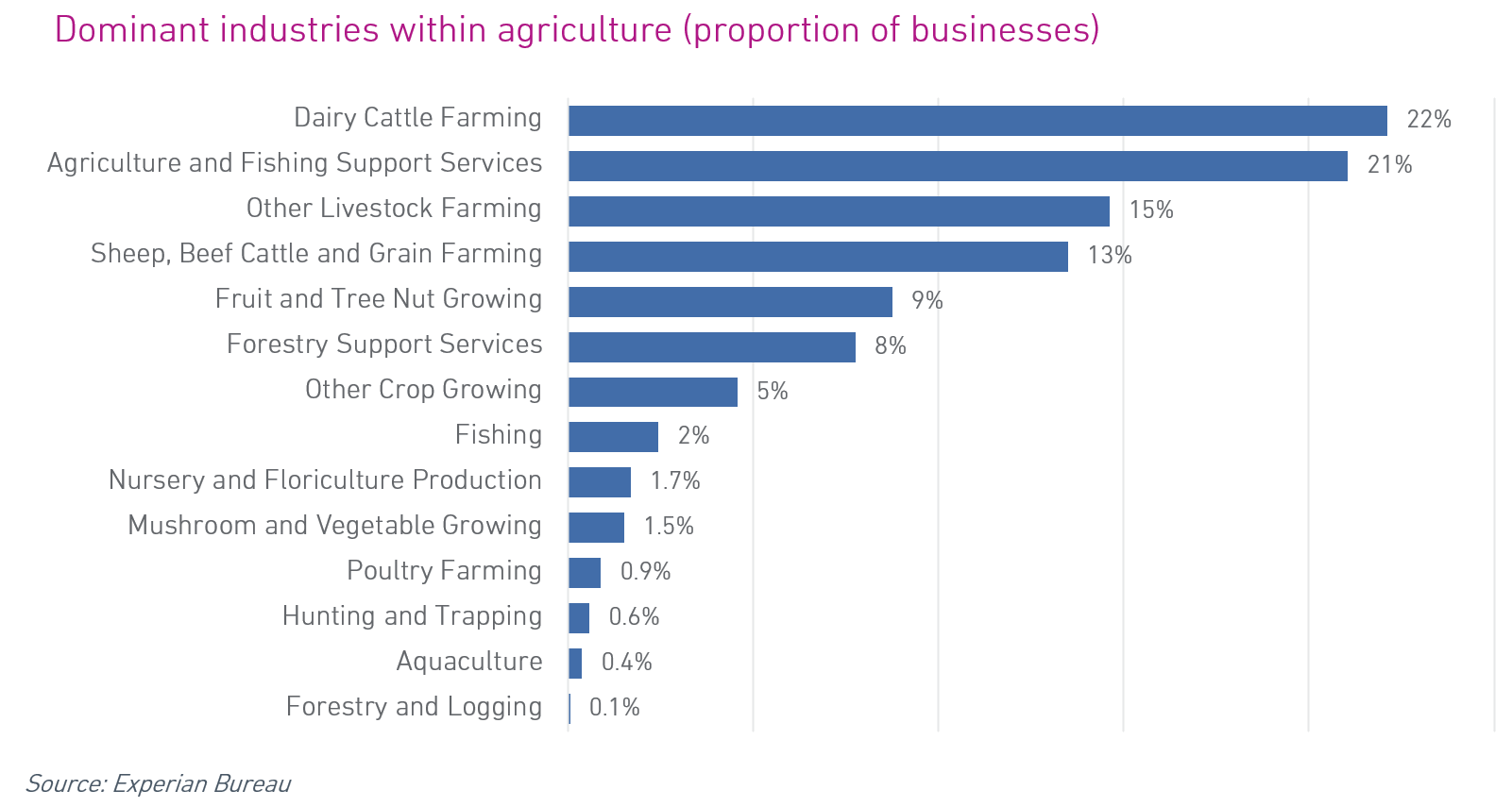
The agriculture industry is undergoing productivity-driven consolidation with cattle, sheep and livestock farming account for half of all businesses in the agriculture industry. Horticulture is also substantial, with the country producing a large variety of fruits.
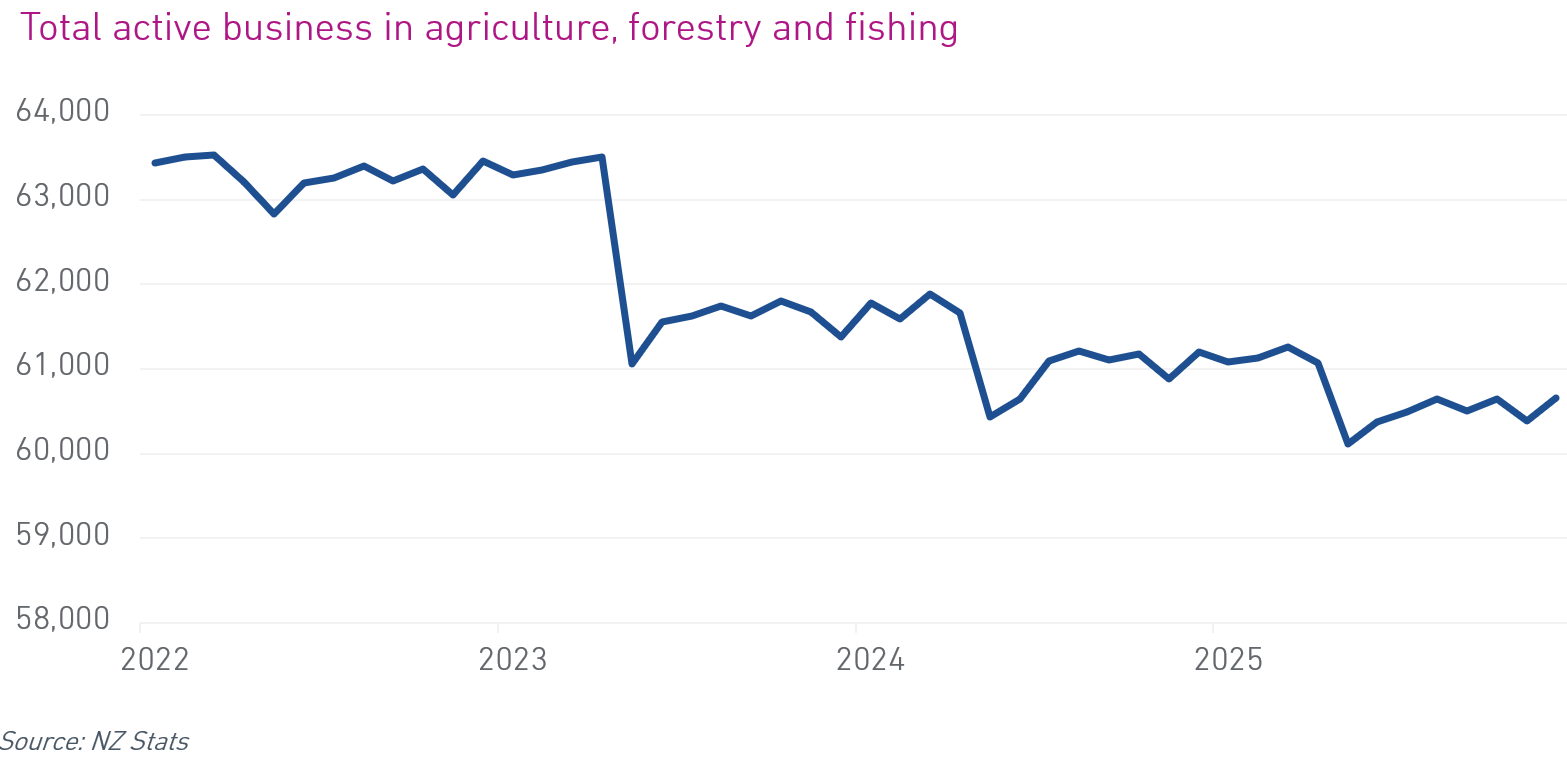
Since 2022, there has been a 4.5% reduction in businesses with the number of active businesses declining each year as demonstrated on the graph below.
Industry output has growth
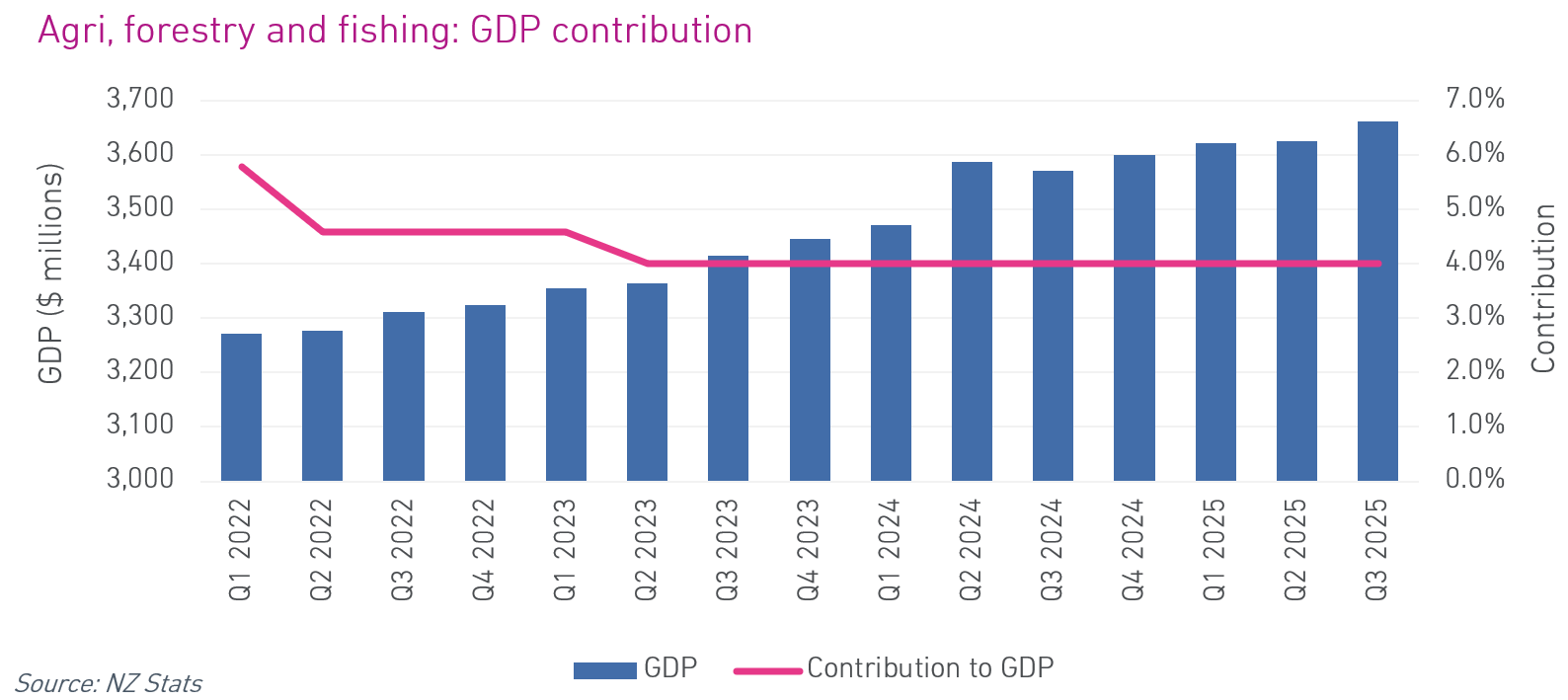
Despite fewer businesses, the industry’s output has grown in recent years to help drive New Zealand’s economic recovery. The agriculture GDP has grown, on average, 3.4% each year over the last 3 years. GDP for the September quarter was up 2.5% versus the same period in 2024.
Dairy product exports have increased by 20.8% in the year 2025 compared to 2024. In New Zealand, dairy is a major export with China being its largest market, followed by the US and Australia. Fruit product exports were low in December (-22.8% YoY) but still considerably up across the full year (+27.5%). 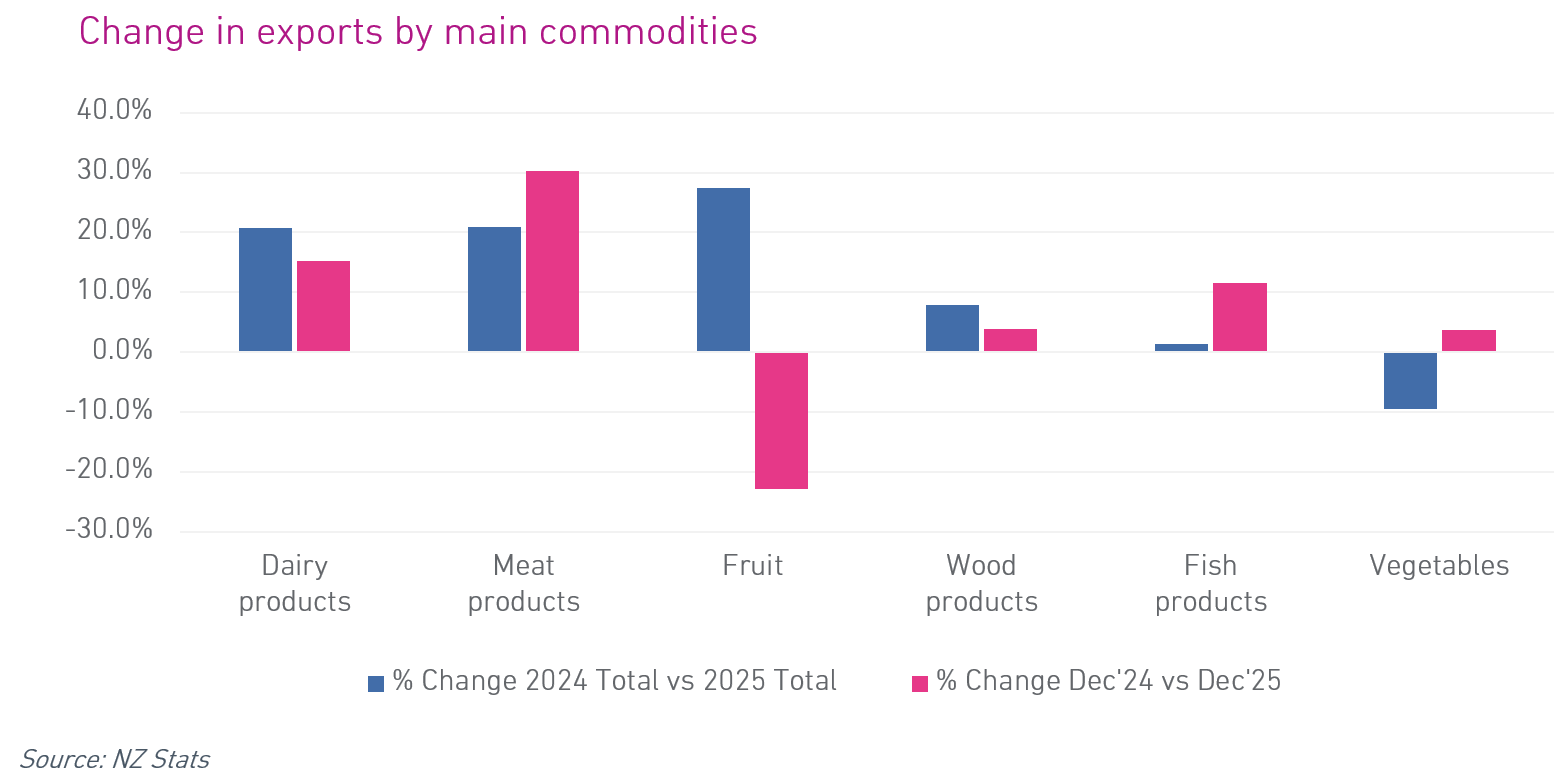
Rising input costs and output prices
Agriculture input costs and output prices have risen in 2025. Input costs rose sharply from late 2022 through early 2023 and, despite stabilising in 2024, have remained consistently high. Recent data shows renewed upward pressure with costs in the December quarter 5.8% higher than the same period last year. This is driven primarily by increases in cattle and grain farming. 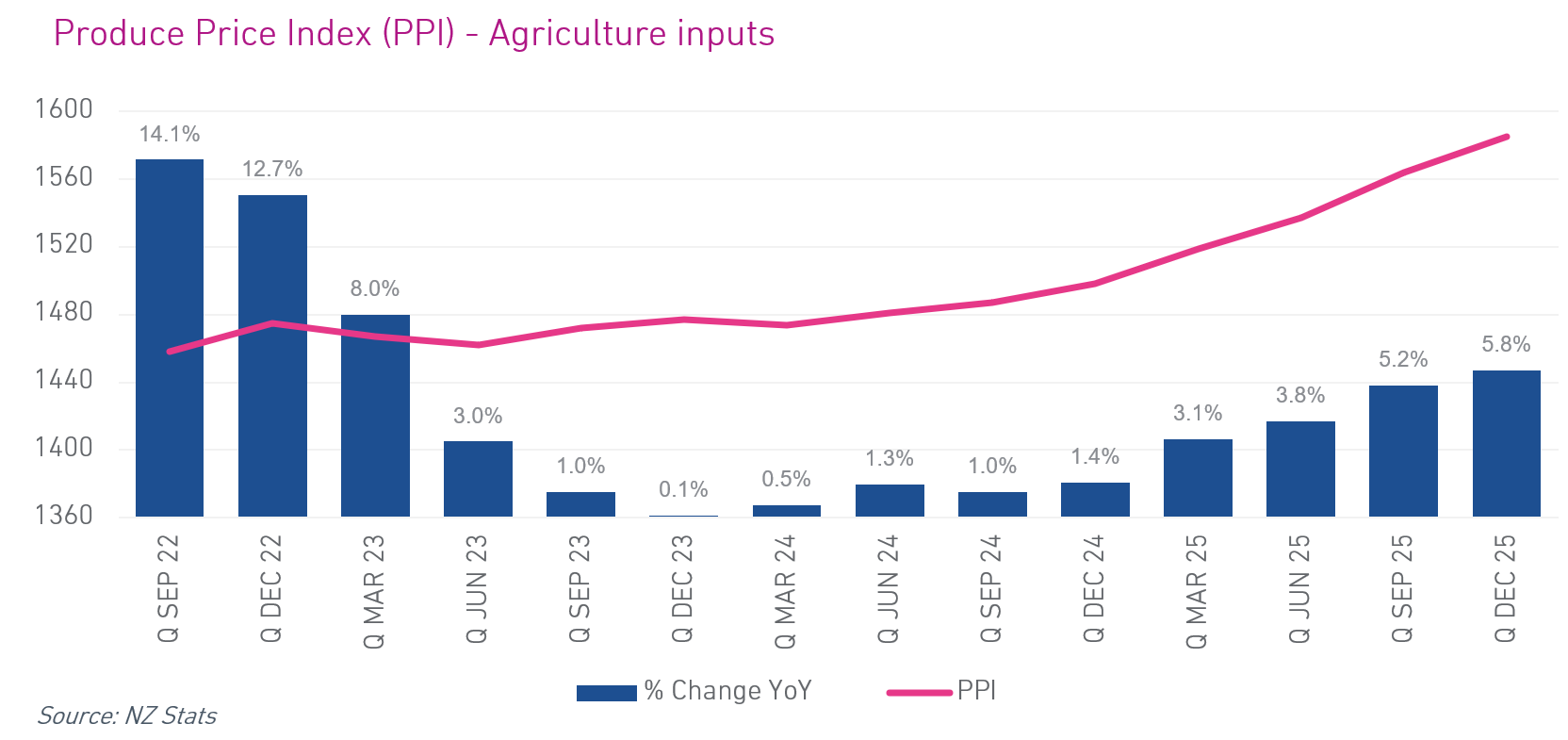
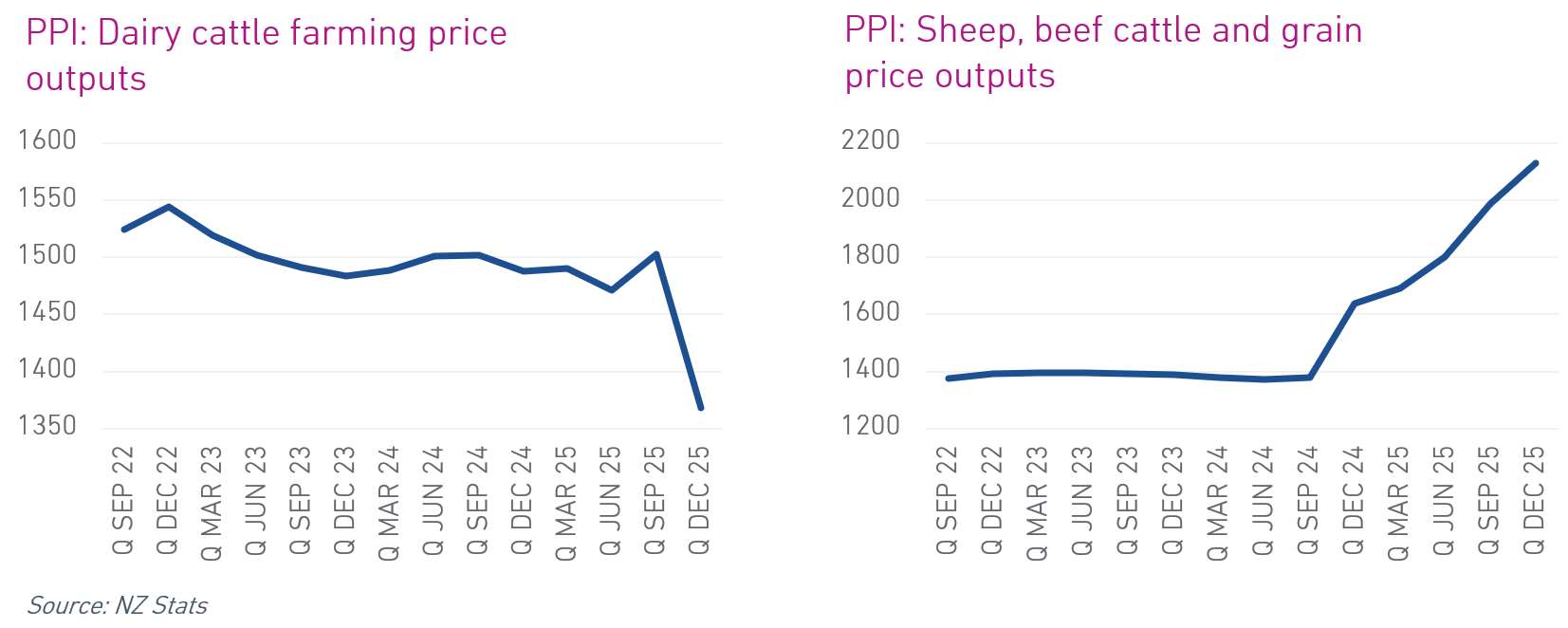
In the December quarter, dairy output prices crashed, falling 135 index points. This was driven by an oversupply as a result of China and the US increasing their own production.
Sheep and beef farm-gate prices climbed significantly in the last 12 months driven by strong international demand and a tight global supply of red meat.
Signs of stability
The level risk across the agriculture industry is showing stability. Agriculture insolvency rates, which are below 1%, have been historically low and continue to be when compared to other industries such as hospitality and construction. Cattle (0.14%) and livestock farming have the lowest insolvency rates and are about 3 to 4 times lower than that of support services business (0.52% to 0.60%) and fruit and vegetable growing (0.66%).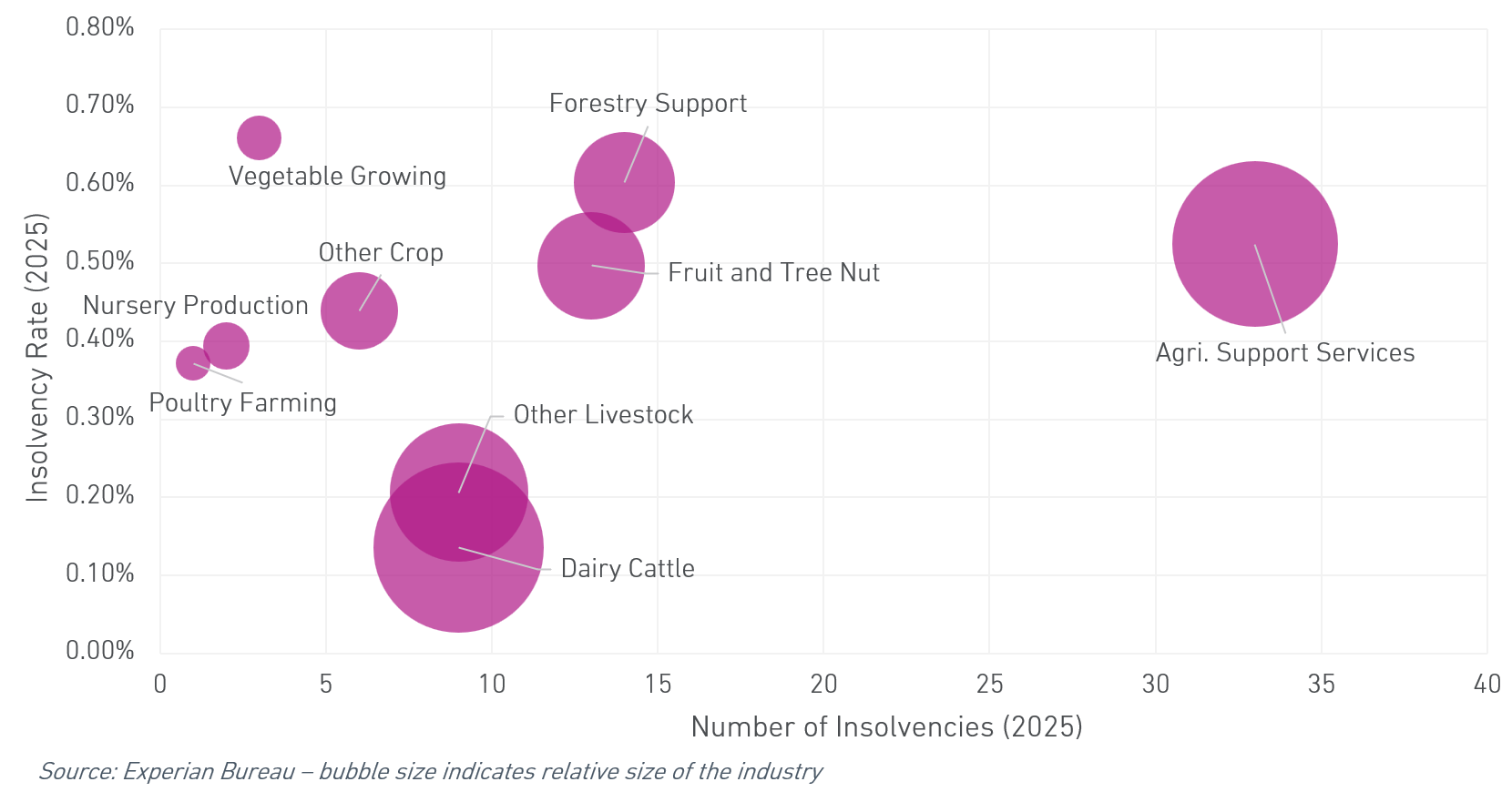
Business-to-business delinquency rates have trended down since 2022, with a brief period of stress seen in the second half of 2023. During this period, the proportion of businesses paying 31 to 60 days beyond terms increased from 4.5% to 8.5% before returning to 4.0% in 2024. These late payments were likely driven by the sudden increase in input costs, combined with lower dairy and meat prices.
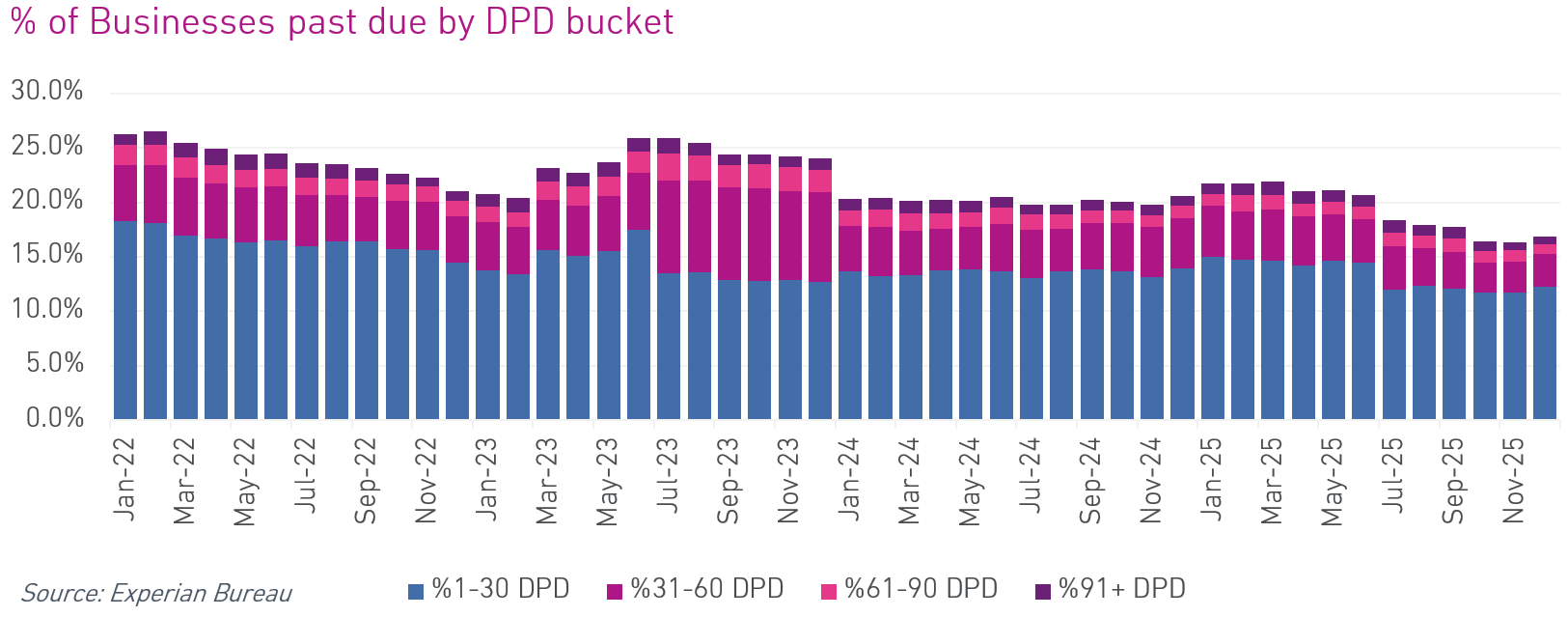
4-year low in B2B late payments
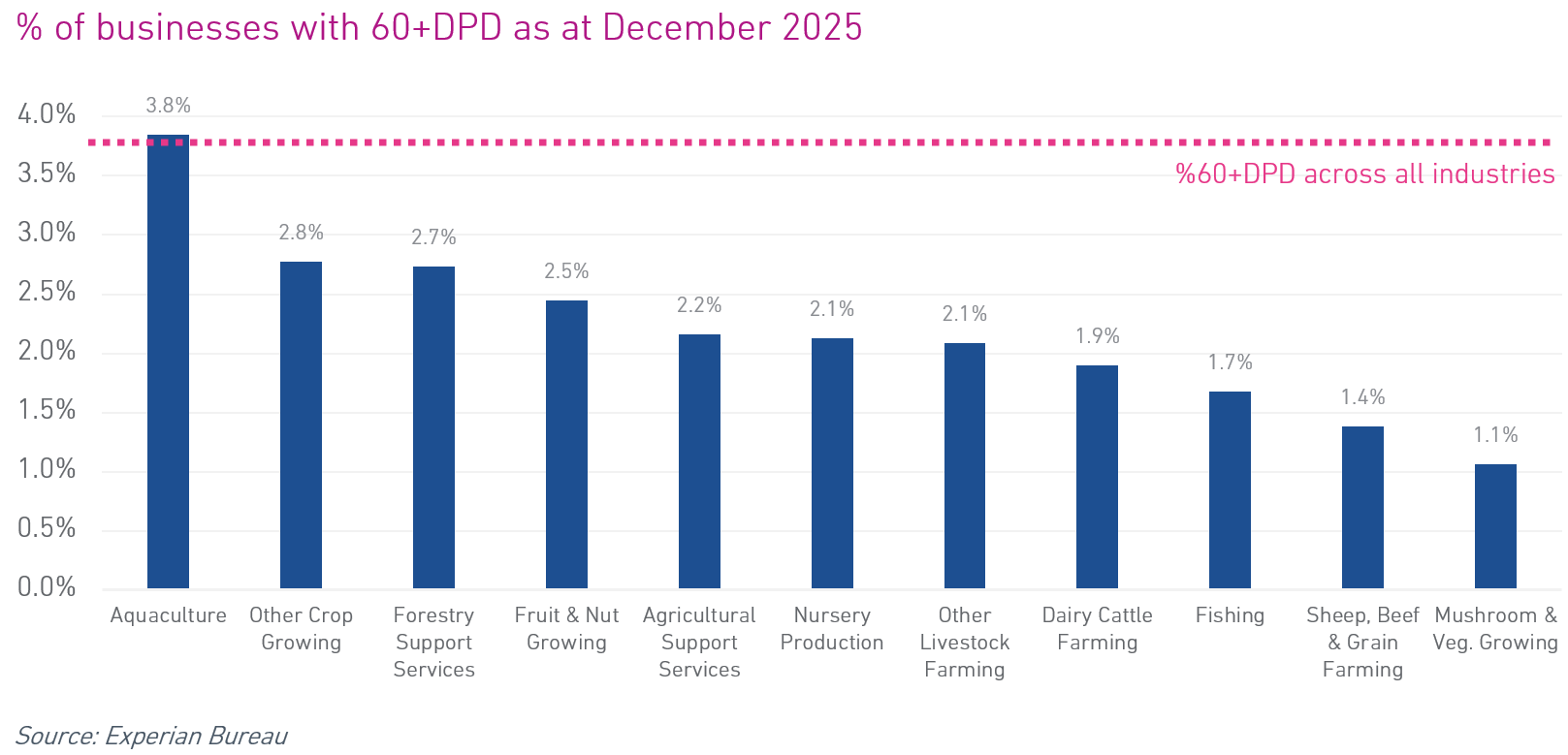
Business-to-business late payments are at a 4-year low. As of December 2025, each sub-industry within agriculture has a lower rate of 60+days past due (DPD) payments than the national average, except for aquaculture.
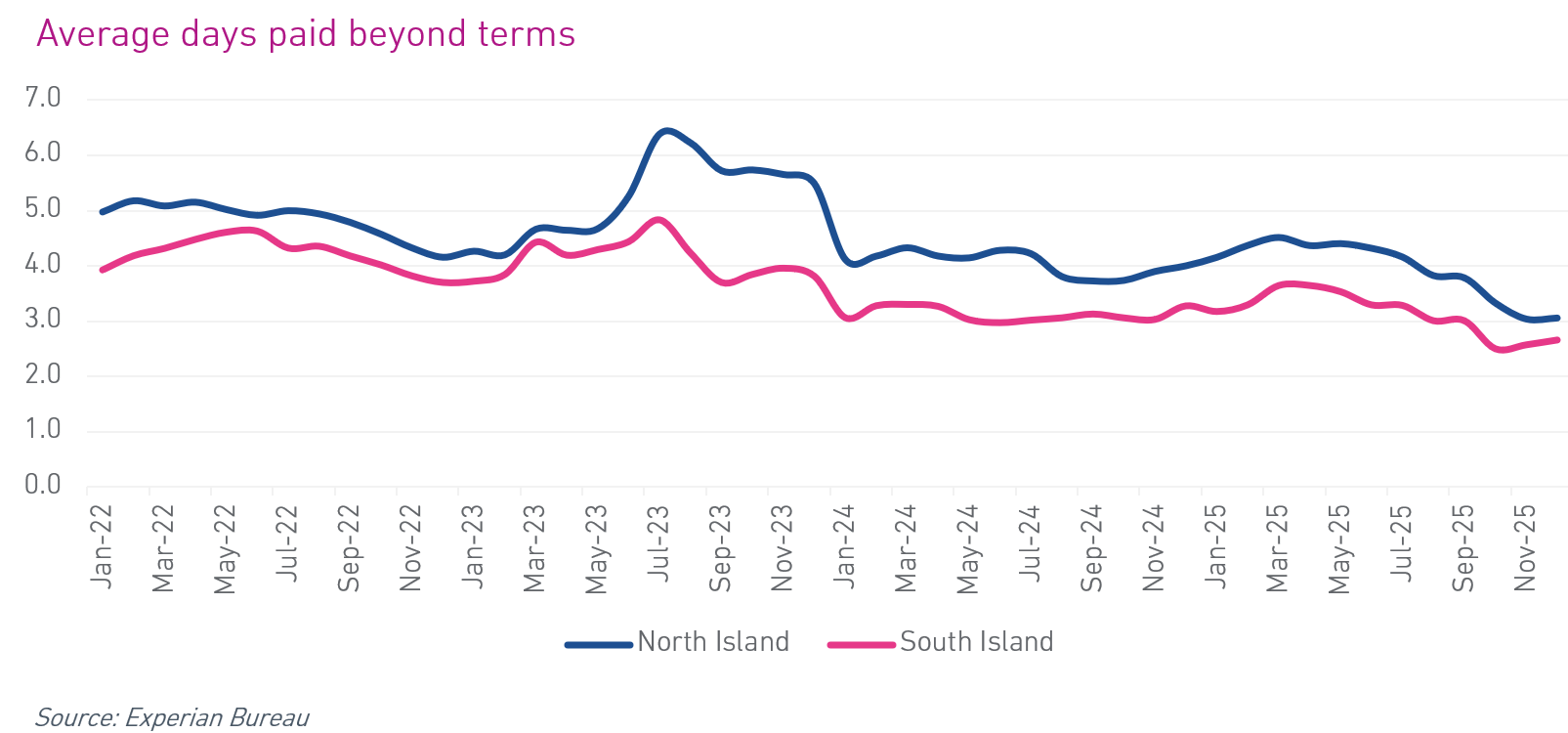
The average number of days paid beyond terms across agribusinesses are at 4-year lows. Regionally, the gap has closed in average late payment between the North and South Island.
Pockets of risk are emerging
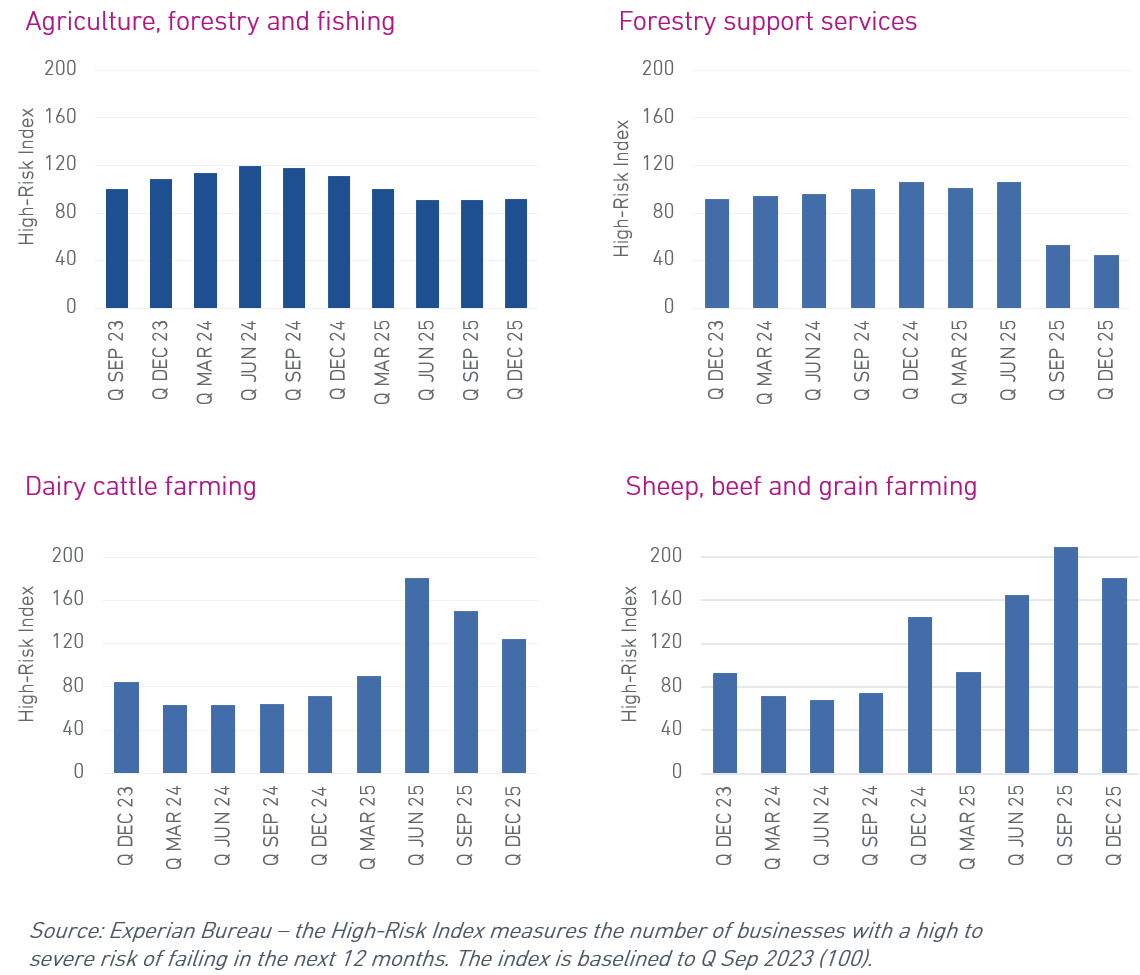
Looking at Experian’s failure risk score, there shows pockets of risk emerging. While the credit risk of businesses in the wider agriculture, forestry and fishing sector appears to be stable, there are signs of stress within sub-industries. Within dairy farming, and sheep, beef and grain farming, the number of businesses with a high to severe risk of failing has significantly increased in the last 6 months. High-risk businesses in dairy farming have increased by 73% for the December quarter compared to the same period in the previous year.
Weak NZD provides greater resilience to NZ exporters
A weak New Zealand dollar provides greater resilience to NZ exporters. The NZD dollar has gradually weakened, falling to a 4-year low by the end of 2025, but with a modest uptick to start the year. The weaker dollar makes NZ’s exports cheaper and more competitive in overseas markets. 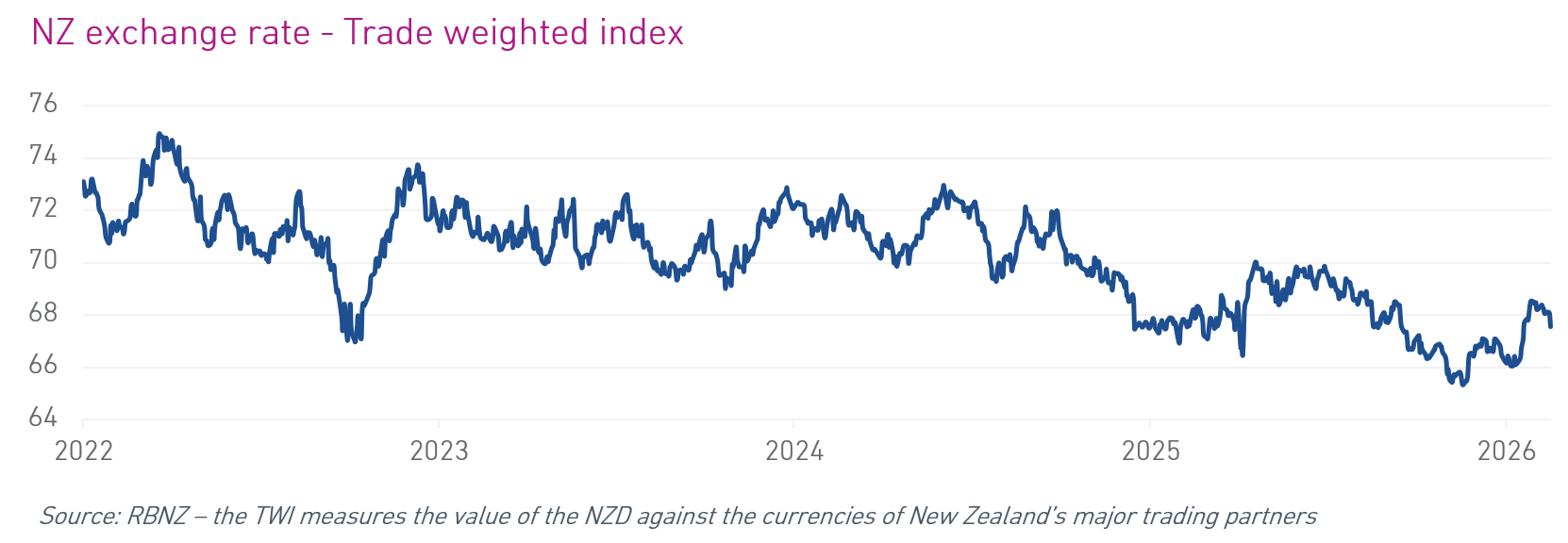
Outlook summary
The agriculture industry grew considerably in 2024-2025, supported by resilient global demand, favourable commodity prices and strong output performance from the dairy cattle industry. Robust returns in dairy and beef were underpinned by constrained supply abroad and a supportive exchange rate environment. Farm input costs, though elevated, were partially absorbed by higher output prices, allowing businesses to maintain profitability despite ongoing cost pressures.
As a result, credit performance for the sector has remained strong, with delinquency rates falling to 4-year lows in late 2025. The deterioration in payment behaviour in 2023, driven by rapid increases in operating costs and global supply disruptions, was short-lived with most businesses recovering as global markets normalised.
Most recently, however, conditions have begun to shift. Rising milk production in major markets such as China and the United States has brought increased competitive pressure on New Zealand’s dairy exporters and a reduction in export prices. This is reflected in emerging credit risk indicators, which show a growing number of dairy and beef cattle businesses moving into a high risk of failure within the next 12 months. While the sector remains broadly robust, these trends highlight the importance of monitoring at-risk businesses closely.
How can we help?
Market insights provide our clients with a deep understanding of their competitive landscape, customer behaviour and market dynamics. By leveraging internal data, industry benchmarks, and external market intelligence, these services can help uncover trends, identify growth opportunities, and inform strategic decision-making. Turn market intelligence into competitive advantage with data-driven insights that drive growth. Contact us to find out how.
Like what you’re reading? We release the Experian Business Pulse Monthly each month and features a Spotlight topic, much like this article. To get the latest reports directly to your inbox, be sure to subscribe.
Contact Us
Disclaimer: This report is provided by Experian Australia Pty Ltd general information and it is not (and does not contain any form of) professional, legal or financial advice. Experian and its related bodies corporate make no representations, warranties or guarantees that the information (including links and the views / opinions of authors and / or contributors) contained in this report are error free, accurate or complete. You are solely responsible and liable for any decision made (or not made) by you in connection with the information contained in this report. Experian (and its related bodies corporate) exclude, to the extent permitted by law, all liability for any and all loss, cost, expense, damage or claim incurred by a party as a result of or in connection with (whether directly or indirectly) this report or any reliance on the information in this report or links contained within. Nothing in this disclaimer excludes, restricts or modifies any rights or remedies that cannot be excluded, restricted or modified under applicable law. Experian and its related entities own, or are licensed to use, the intellectual property rights in this report and its contents. Except as permitted by law, the contents of this report must not be reproduced, modified, distributed or republished without Experian’s prior written consent.
Experian and the Experian marks used herein are service marks or registered trademarks of Experian or its related entities worldwide. Other product and company names mentioned herein are the property of their respective owners.