
Cost-of-living pressures
The cost-of-living crisis in Australia has been driven by a combination of factors, including rising prices for goods and services, housing, and transportation. Since 2019, Australia’s inflation has shown significant volatility. The COVID-19 pandemic initially caused deflation in 2020, but inflationary pressures increased in 2021 and 2022 due to supply chain disruptions, rising energy prices, and heightened consumer demand, reaching a peak of 7.8% in December 2022. Although inflation has since moderated to 3.8%, it remains above the Reserve Bank of Australia’s (RBA) target range of 2-3%.
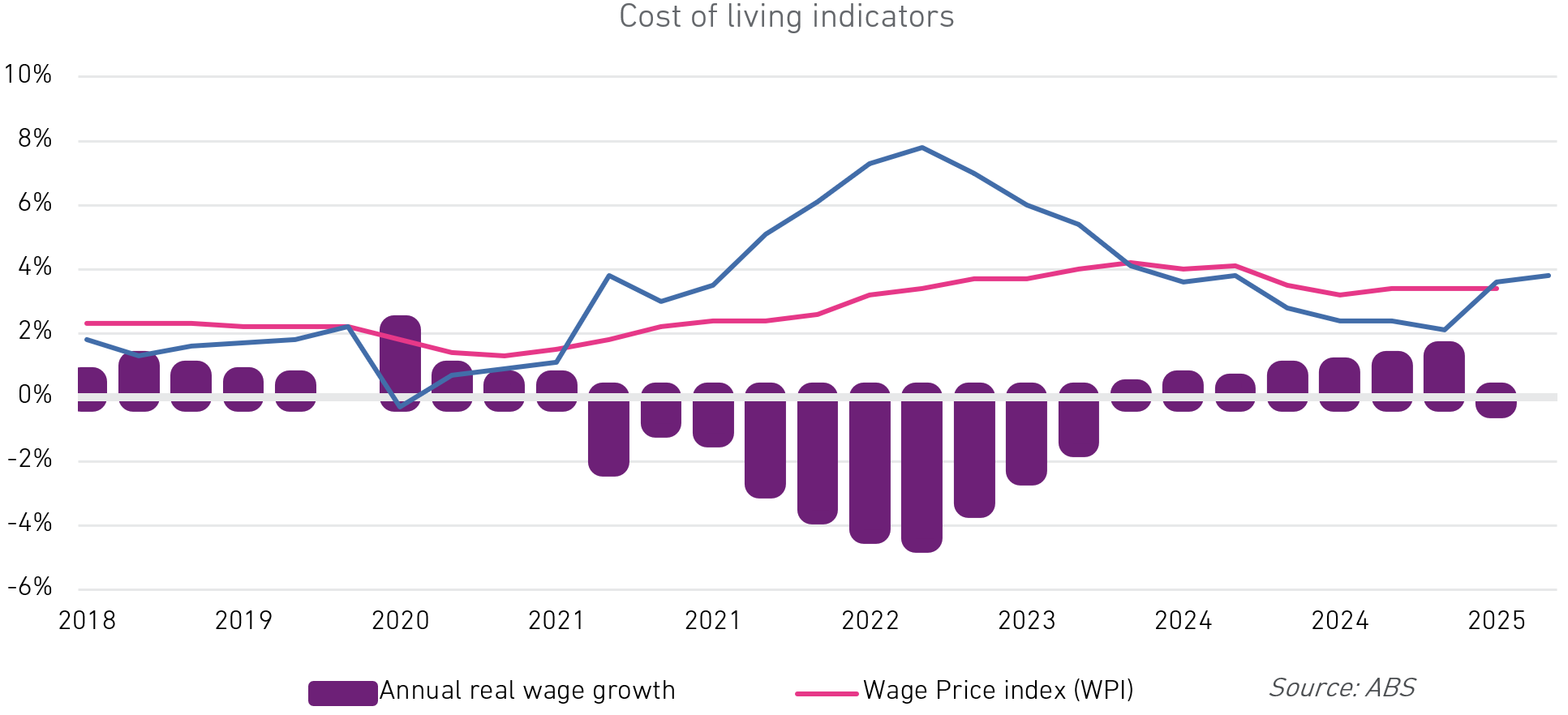
In 2022, Australians faced the largest real wage decline on record, with nominal wages growing by 3.3 percent, significantly lagging behind the 7.8 percent inflation rate. Although nominal wages did increase, they were insufficient to keep pace with rising costs, severely diminishing the purchasing power of the average Australian.
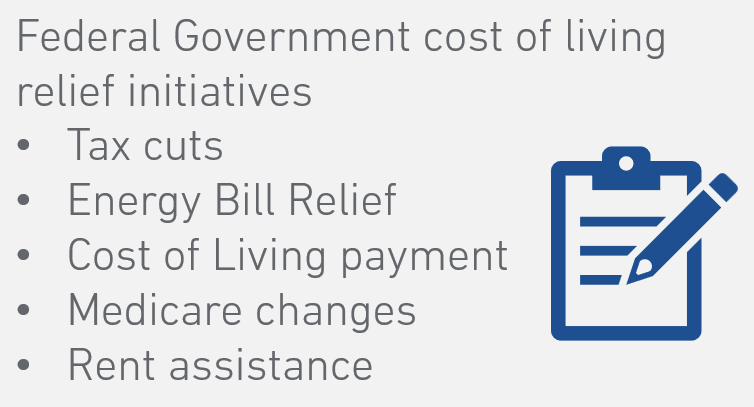
More recently, the 2025-26 Australian federal budget included strategies aimed at ensuring fiscal settings remain consistent with keeping inflation within the RBA’s target range.
In 2025, inflation began to gradually increase once more. December’s inflation data showed CPI rose 3.8% in the 12 months prior, up from 3.4% in November. As a result, the RBA lifted interest rates by 25 basis points to 3.85% following its first meeting of 2026 – a move was widely forecasted by the market and will add more stress to consumers.
RBA cash rate
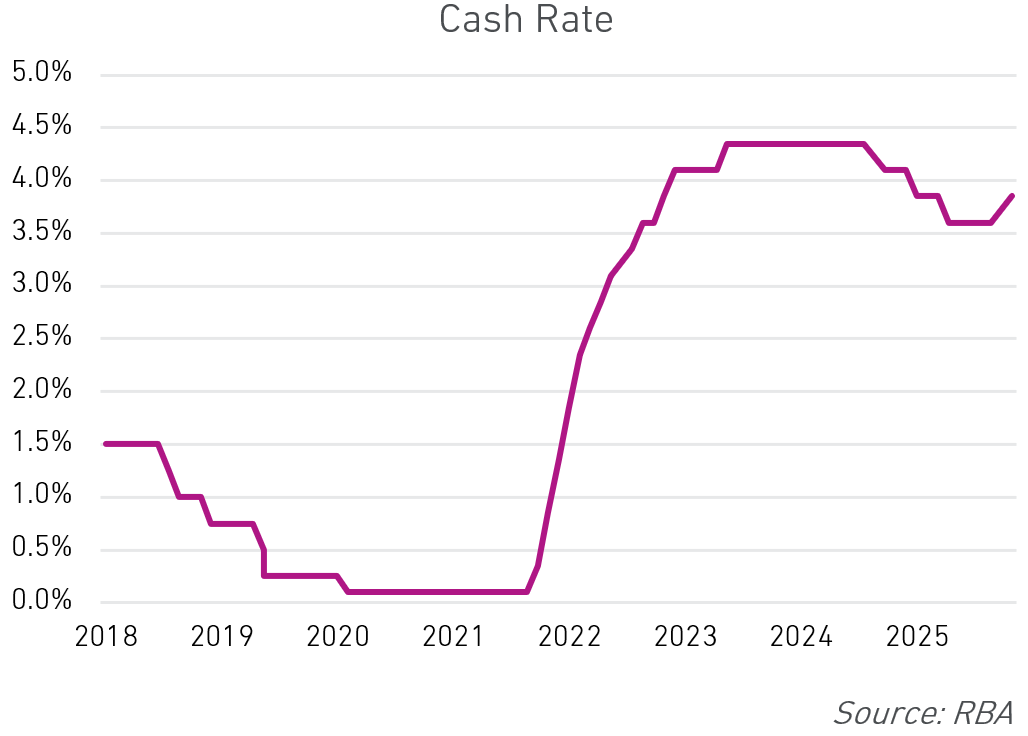 In 2020, the RBA reduced the cash rate to record lows in response to the COVID-19 pandemic, thereby lowering borrowing costs and boosting household spending, albeit at the expense of reduced returns on savings. The following year saw a surge in housing demand and property prices, while inflation remained relatively subdued.
However, in 2022 , rising inflation led the RBA to increase the cash rate, resulting in higher borrowing costs and better returns on savings. The increased cost of living due to inflation put additional pressure on household budgets. Between 2022 and 2023, the RBA raised interest rates 13 times, and combined with slower wage growth, this period saw Australians experiencing heightened financial stress.
Is it bad timing for Gen Z?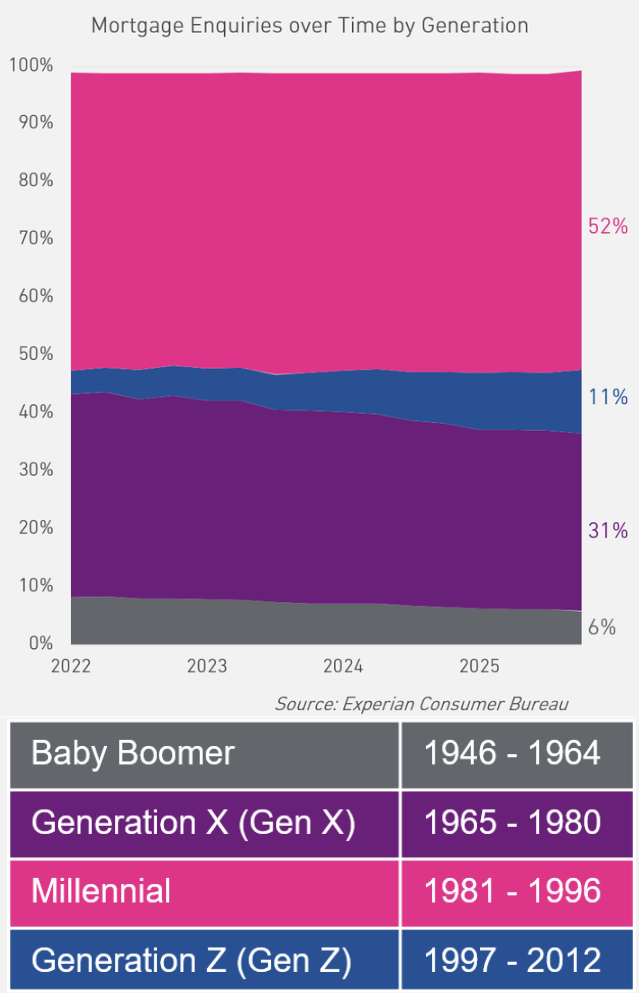
As Gen Z, aged 14 to 29, begins to reach the age where homeownership becomes a viable option, their entry into the housing market will be a challenging task as the current cost of living crisis adds an additional layer of complexity to their journey towards home-ownership.
This demographic shift is expected to further increase competition in a market currently dominated by Millennials and Gen X.
Mortgage enquiries
In 2020, mortgage application volumes reached unprecedented levels, driven by low interest rates and government incentives. In the subsequent years, demand cooled slightly and eventually declined due to inflationary pressures and a robust housing market driving prices higher. As more Gen Z consumers entered the property market, they exhibited a stronger demand for credit compared to other age groups – almost doubling over the last 3 years. This trend was particularly noticeable in metropolitan areas of Australia.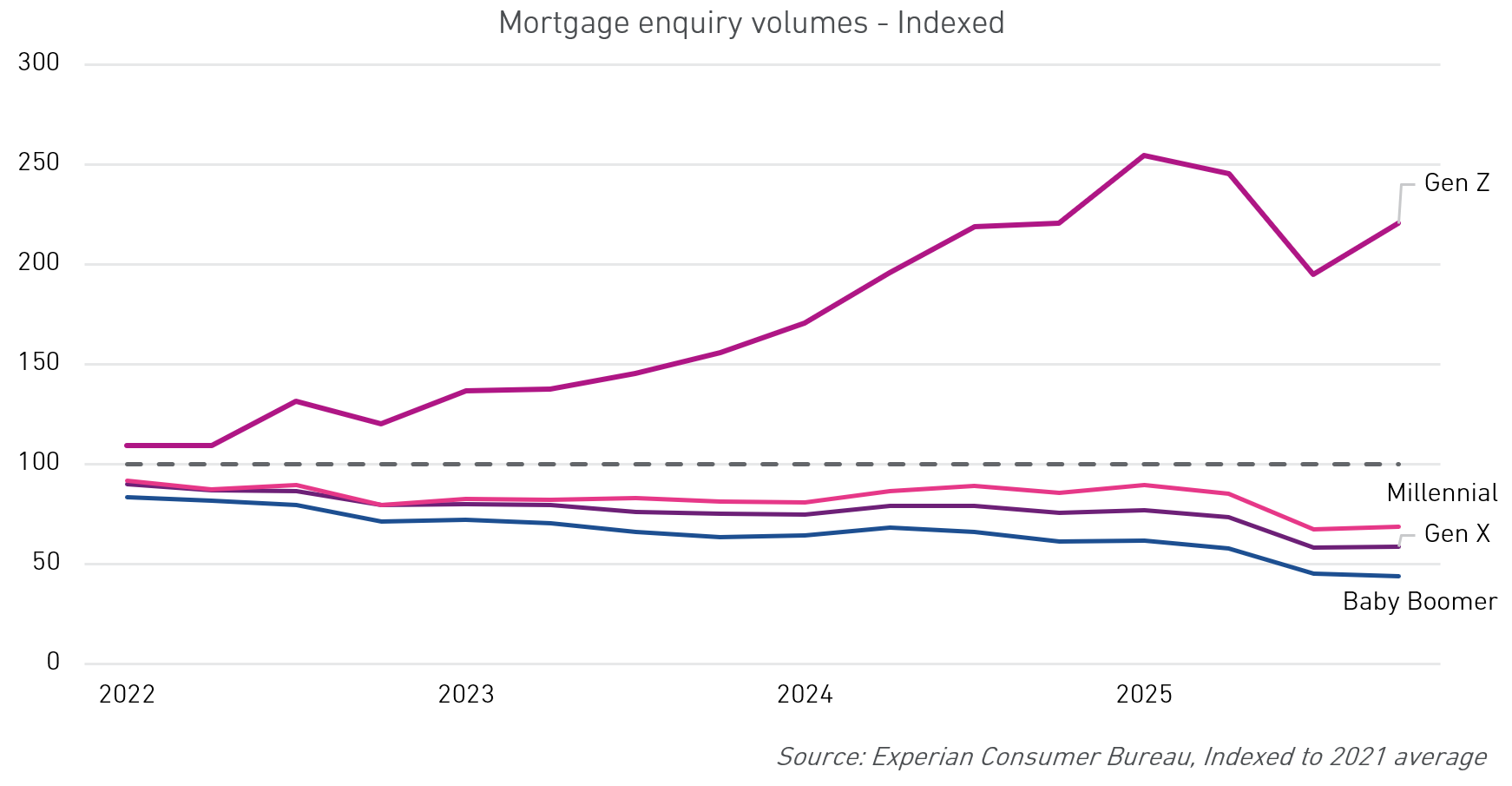
The surge in demand from Gen Z can be attributed to a convergence of several factors. Their growing population and eagerness to enter the housing market, combined with the timely introduction of government initiatives aimed at assisting first-time home buyers, have significantly influenced the numbers associated with Gen Z.
The pathways to home ownership have become more varied, as highlighted in Finder’s First Home Buyer Report 2025. The report reveals that 17% of first-time buyers received financial assistance from their parents, an increase from 11% in 2022. Among those without parental support, 40% took five years or more to save for a deposit, in contrast to just 29% of those who benefited from the “bank of mum and dad.” 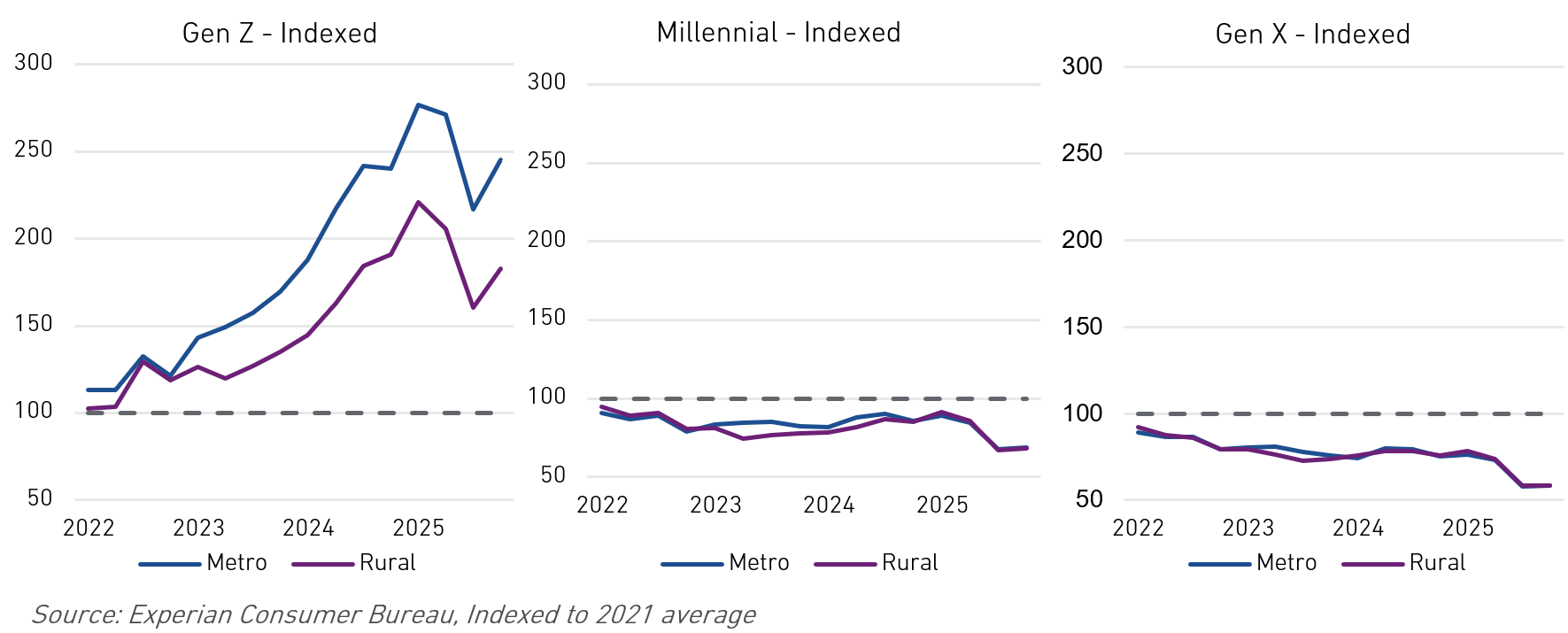
The post-pandemic shift towards hybrid and remote work has prompted many to explore relocating further into suburban areas, away from city centres. According to the Regional Australia Institute’s Regional Movers Index (RMI), the migration from capital cities to regional areas from 2022 to 2024 remained consistent with levels observed during the peak of the
COVID-19 pandemic. The RMI for the March 2024 quarter was approximately 20% above the
pre-COVID average.
Metro demand remains in front, with the regional surge normalising. Across cohorts, enquiry momentum is still metro‑led. Among Gen Z, both metro and regional interest accelerated through 2023–24, but regional enquiries rolled over into early 2025 while metro interest remains elevated. For Millennials and Gen X, the metro–regional gap is modest, with both lines trending flat to slightly lower. Overall, the pandemic‑era regional uplift appears to be easing, while younger buyers are re‑engaging with metro locations for access to jobs and amenities.
Those who chose to remain in city centres often made compromises by selecting smaller living spaces, such as apartments, units, and townhouses.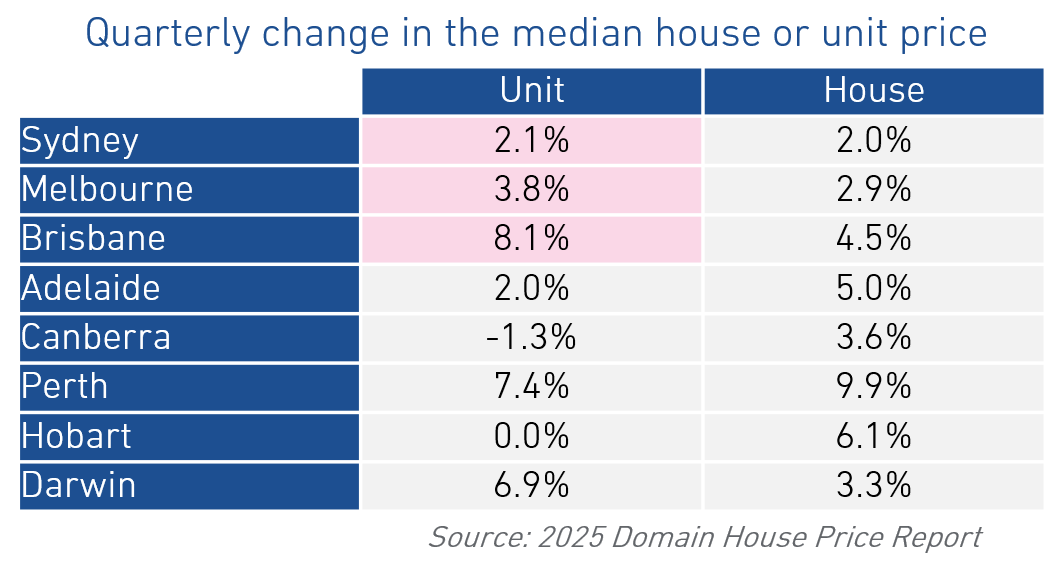 The December 2025 Domain House Price Report indicates that the growth in prices between houses and units is more evenly distributed.
During the quarter, units outperformed houses in Sydney, Melbourne, and Brisbane. While prices are anticipated to continue rising, the recent interest rate increase and the possibility of further hikes in 2026 may temper growth.
Enquiry amounts
There is heightened demand from Gen Z for mortgages, accompanied by a significant increase in enquired credit amounts. Median mortgage application amounts across various age groups reveals a robust rise in borrowing figures, with Gen Z exhibiting a particularly pronounced increase – a trend likely attributed to their life stage, as many are entering/new to the workforce and establishing careers, requiring more borrowings compared to other age groups.
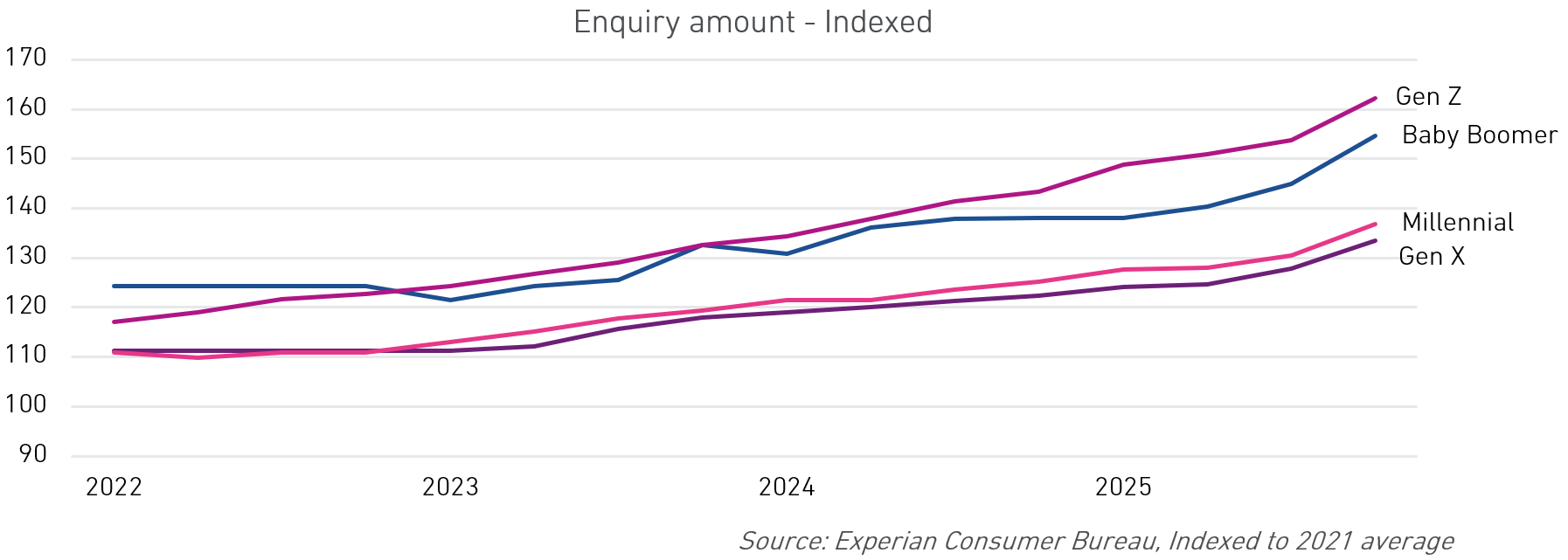
There are noticeable regional differences in Gen Z enquiries. From an early‑2023 baseline to late‑2025, South Australia is up 55%, Queensland 55%, and Western Australia 53% after a delayed but sharp pickup in 2024 that pushed it ahead of NSW, VIC and the ACT (each 23%).
Aware of the high median house prices in Sydney and Melbourne, Gen Z Australians face additional challenges with house and unit price growth in other capital cities. According to the December 2025 Domain House Price Report, Perth (18.4%), Brisbane (13.3%), and Adelaide (11.9%) all outperformed the two major capital cities year-on-year in 2025. A breakdown of the Gen Z inquiry amount index reflects this trend. 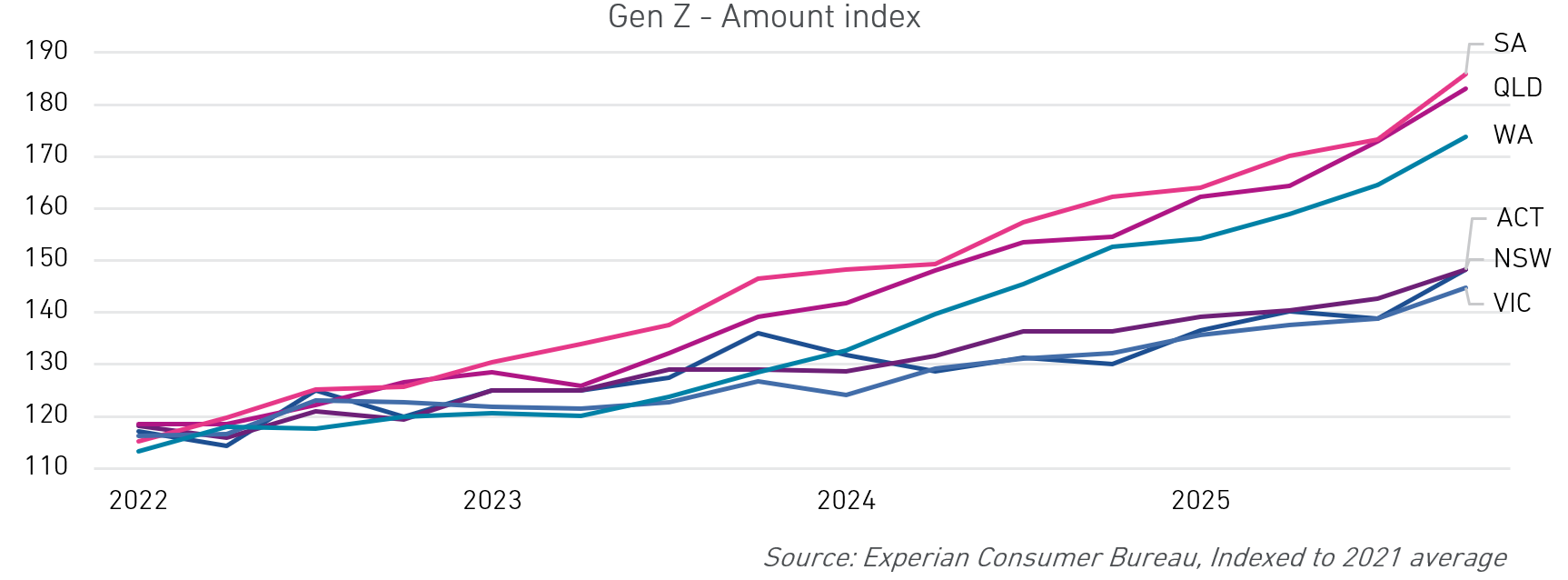
First Home Buyers
We defined First Home Buyers (FHBs) as individuals who applied for mortgages but do not currently possess an active mortgage or one that closed within the past two years.
When the data is segmented by generation, a clear distinction emerges between first-time home buyers and those with existing mortgages. The demand from Gen Z has remained strong over the past four to five years, even amidst challenging economic conditions.
Gen Z enquiry strength is concentrated among borrowers who already hold a mortgage. Since 2022, Gen Z existing‑mortgage applications are up 250% (after a brief pull‑back from the peak), while Gen Z first‑home‑buyer enquiries are up a more modest 65% and notably more volatile. In contrast, Millennials have softened, and Gen X is broadly steady. At the latest reading, Gen Z existing‑mortgage demand sits higher than Gen Z first‑home‑buyer activity and is higher than Millennial/Gen‑X levels.
The outperformance among Gen Z existing‑mortgage applicants likely reflects (1) equity effects – owners can leverage accumulated equity/offsets to upgrade or invest; (2) credit access – returning borrowers typically clear serviceability more easily than new entrants; and (3) opportunity timing – rate volatility and shifting price tiers created windows to trade up or switch products.
Meanwhile, FHBs face a tougher deposit and serviceability hurdle amid elevated prices and high living costs; rent inflation makes saving slower and buffers/DTI constraints bite harder; and the product mix skews toward attached dwellings in well‑located metros – assets often targeted by existing owners (upgraders/investors) rather than FHBs – leaving FHB enquiry growth smaller and choppier.
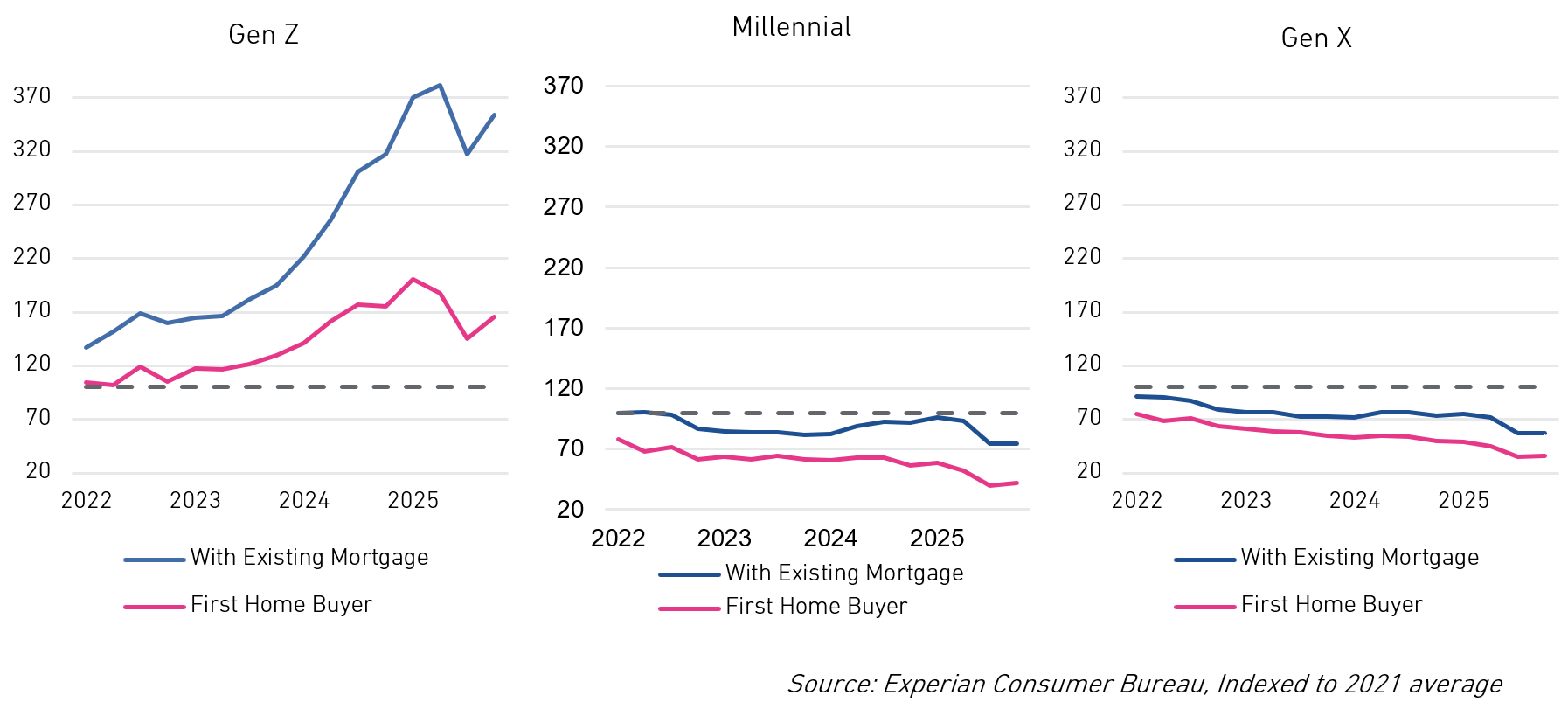
The cost‑of‑living squeeze is playing out differently by generation, reshaping both the pace and the pathway to homeownership.
Among Gen Z, mortgage demand has proven resilient but uneven across segments: enquiries from existing mortgage holders are up since 2022, reflecting the ability of returning borrowers to leverage equity and navigate serviceability, while FHB activity is up and remains notably cyclical. The Gen Z profile is also metro‑tilted, aligning with the unit‑led recovery we’ve observed in major capitals and the stronger momentum in states such as SA/QLD (and WA’s later acceleration).
By contrast, Millennials – despite being in their prime buying years – have softened under higher prices and borrowing costs, with enquiries down for existing holders and for FHBs.
Gen X and Boomers appear steadier overall, yet rate and cost pressures are clearly influencing decisions around downsizing, portfolio rebalancing, and investment property activity.
How can we help?
Market insights provide our clients with a deep understanding of their competitive landscape, customer behaviour and market dynamics. By leveraging internal data, industry benchmarks, and external market intelligence, these services can help uncover trends, identify growth opportunities, and inform strategic decision-making. Turn market intelligence into competitive advantage with data-driven insights that drive growth. Contact us to find out how.
Like what you’re reading? We release the Experian Business Pulse Monthly each month and features a Spotlight topic, much like this article. To get the latest reports directly to your inbox, be sure to subscribe.
Contact Us
Disclaimer: This report is provided by Experian Australia Pty Ltd general information and it is not (and does not contain any form of) professional, legal or financial advice. Experian and its related bodies corporate make no representations, warranties or guarantees that the information (including links and the views / opinions of authors and / or contributors) contained in this report are error free, accurate or complete. You are solely responsible and liable for any decision made (or not made) by you in connection with the information contained in this report. Experian (and its related bodies corporate) exclude, to the extent permitted by law, all liability for any and all loss, cost, expense, damage or claim incurred by a party as a result of or in connection with (whether directly or indirectly) this report or any reliance on the information in this report or links contained within. Nothing in this disclaimer excludes, restricts or modifies any rights or remedies that cannot be excluded, restricted or modified under applicable law. Experian and its related entities own, or are licensed to use, the intellectual property rights in this report and its contents. Except as permitted by law, the contents of this report must not be reproduced, modified, distributed or republished without Experian’s prior written consent.
Experian and the Experian marks used herein are service marks or registered trademarks of Experian or its related entities worldwide. Other product and company names mentioned herein are the property of their respective owners.