
How consumers triage debt.
An environment where every dollar matters.
The current consumer credit landscape has been shaped by a rapid and, in many cases, exceptional shift in macro‑economic conditions across Australia and New Zealand in the last few years. In Australia, the Reserve Bank’s aggressive tightening cycle throughout 2022 and 2023 marked a decisive turning point after a prolonged period of historically low interest rates – a similar situation unfolded in New Zealand. Cash rate increases flowed quickly through to variable mortgage rates, materially lifting household debt servicing costs and placing pressure on borrowers who had accumulated record‑high levels of leverage during the low‑rate environment.
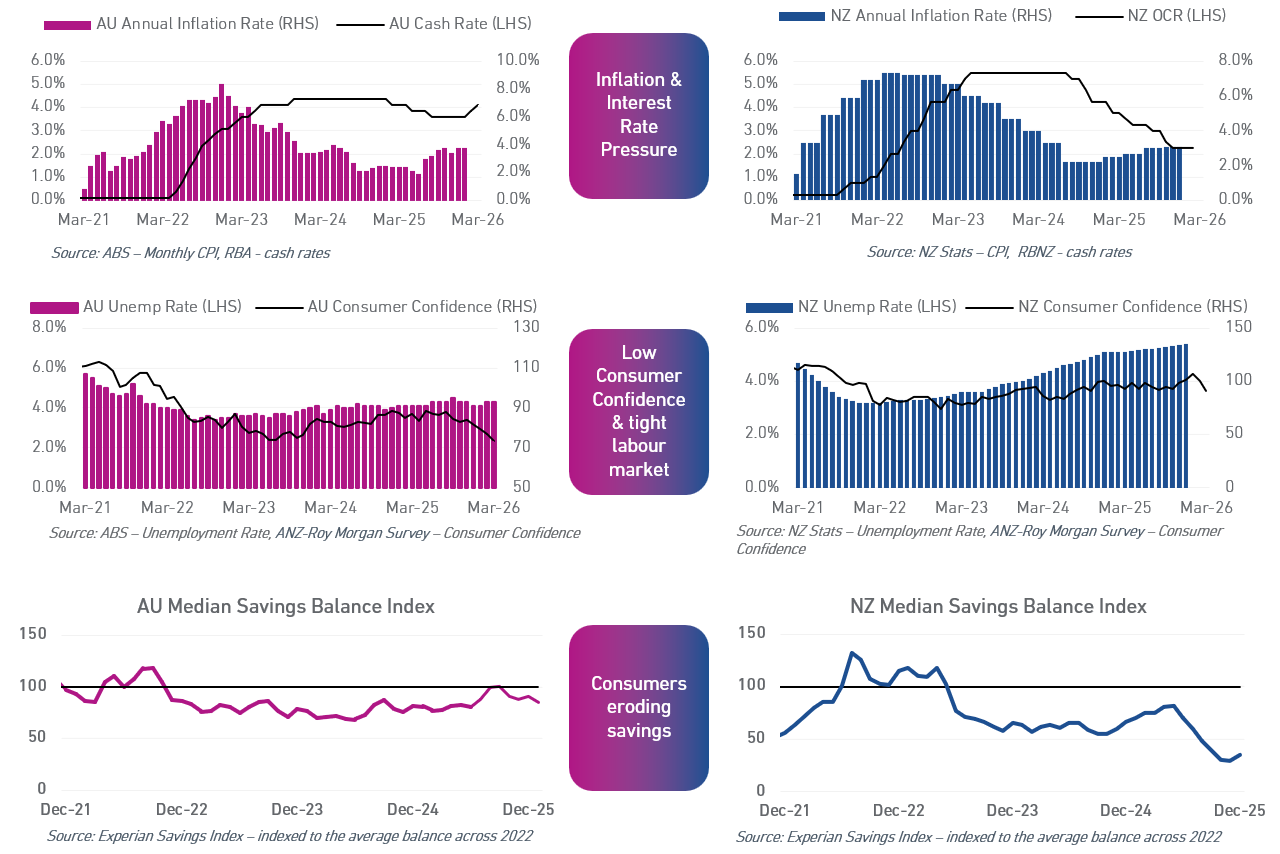
These pressures emerged following a strong upswing in residential property prices across major Australian and New Zealand cities and regional areas. Sydney, Melbourne, Brisbane, and Auckland all experienced substantial house price growth during 2020-2022, supported by low borrowing costs, government stimulus and heightened demand. As property values rose, so too did average mortgage sizes, leaving households more exposed to those subsequent rate increases. At the same time, elevated inflation eroded real incomes and contributed to a drawdown in household savings buffers that had been built up during the pandemic period. The combination of higher mortgage repayments, increased consumer prices and reduced savings has significantly narrowed financial flexibility for many households. How are consumers coping?
Hard times, hard choices. Has payment priorities changed?
Historical analysis conducted by Experian supports long-held industry assumptions that, particularly in early stages of early arrears, credit cards are typically the first product to slip when signs of stress arise. Traditionally, homeowners tend not to let their mortgages slip first, prioritising a roof over their heads.
Our recent updated analysis compares payment priorities before and after interest rate rises and the broader economic downturn. By examining behaviour across different consumer segments, it considers whether financial pressure is changing the choices households make about which bills are paid first.
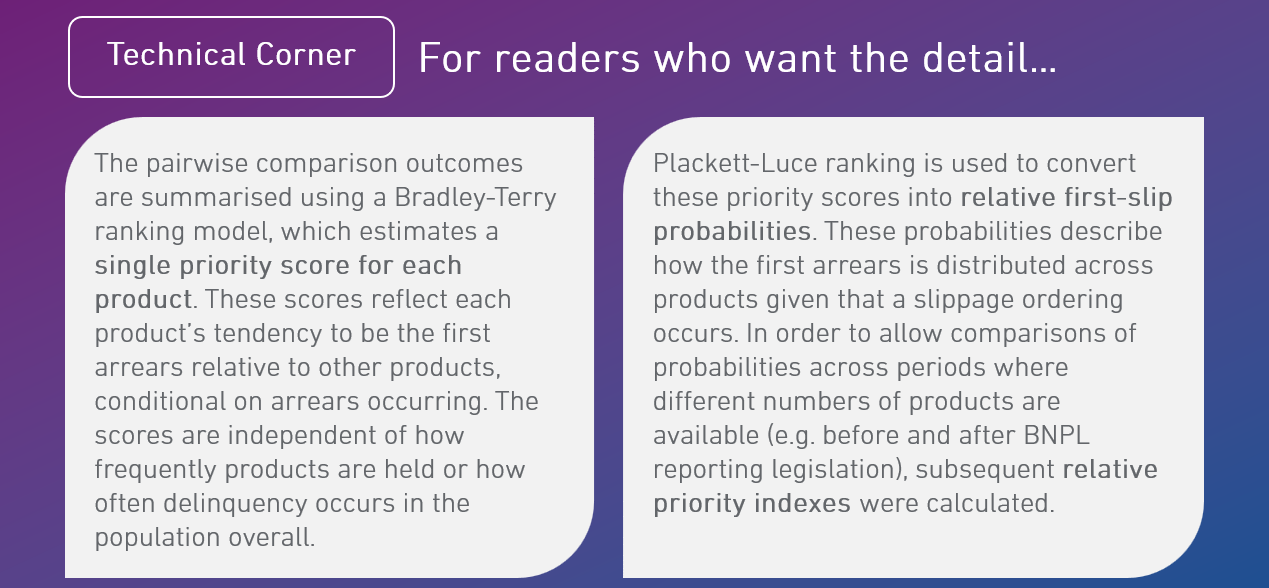
Using up-to-date consumers who hold multiple credit products, the analysis identifies which obligations are most likely to ‘slip’ first – whether that be early arrears (30+ days past due) or more severe delinquency (90+ days past due).
When money gets tight, does the mortgage still come first?
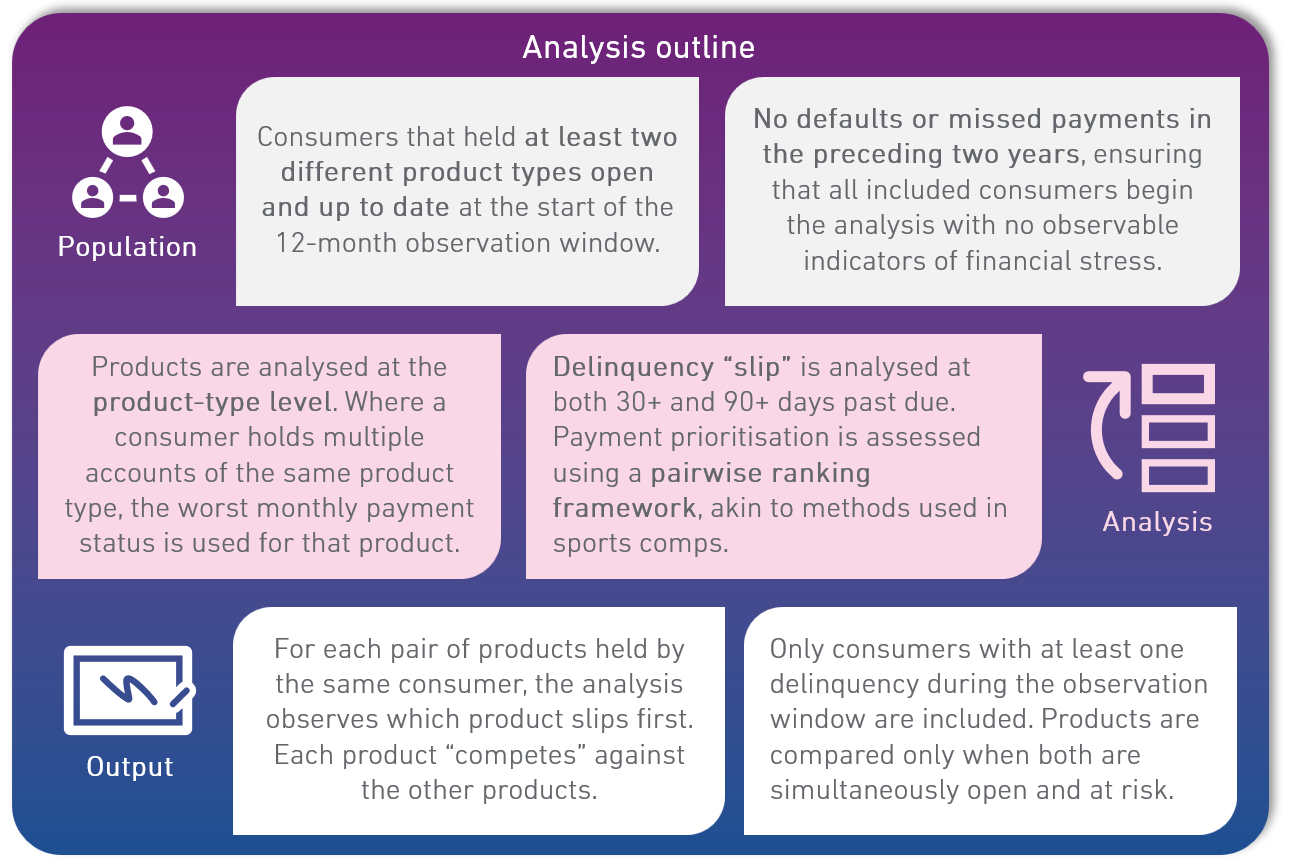

Early arrears: Protecting the home at all costs
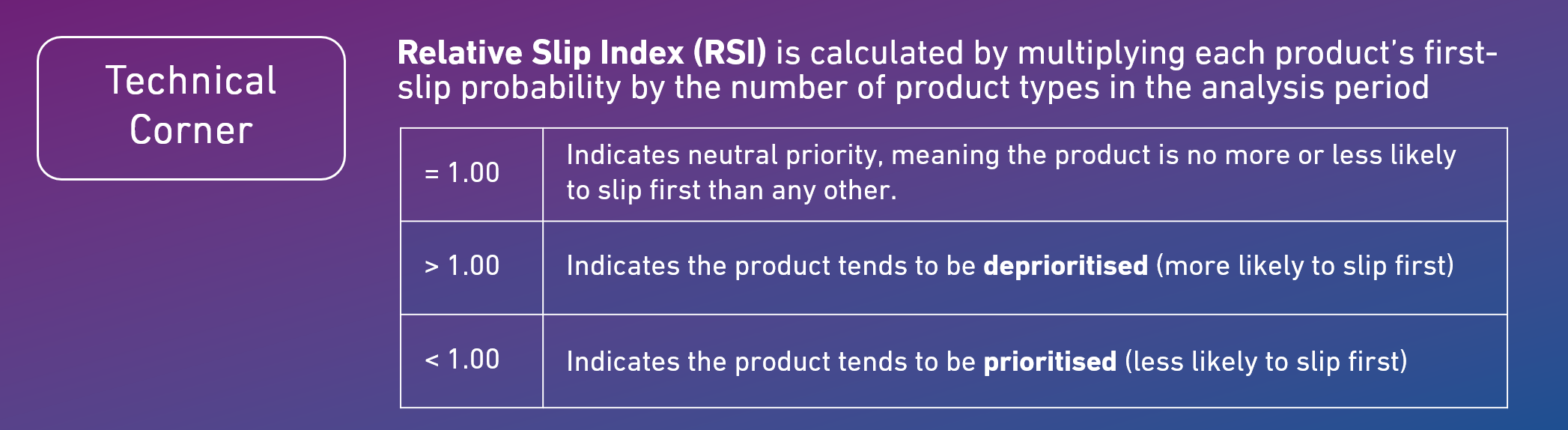
Credit cards are typically the first product to slip when signs of stress arise, with mortgages the least likely to go first. Certainly, before the Reserve Bank of Australia began raising interest rates in 2022 this still held true, with the data showing credit cards being most likely to slip to 30+DPD in the 12 months to April 2022. Mortgages were the least likely to slip first.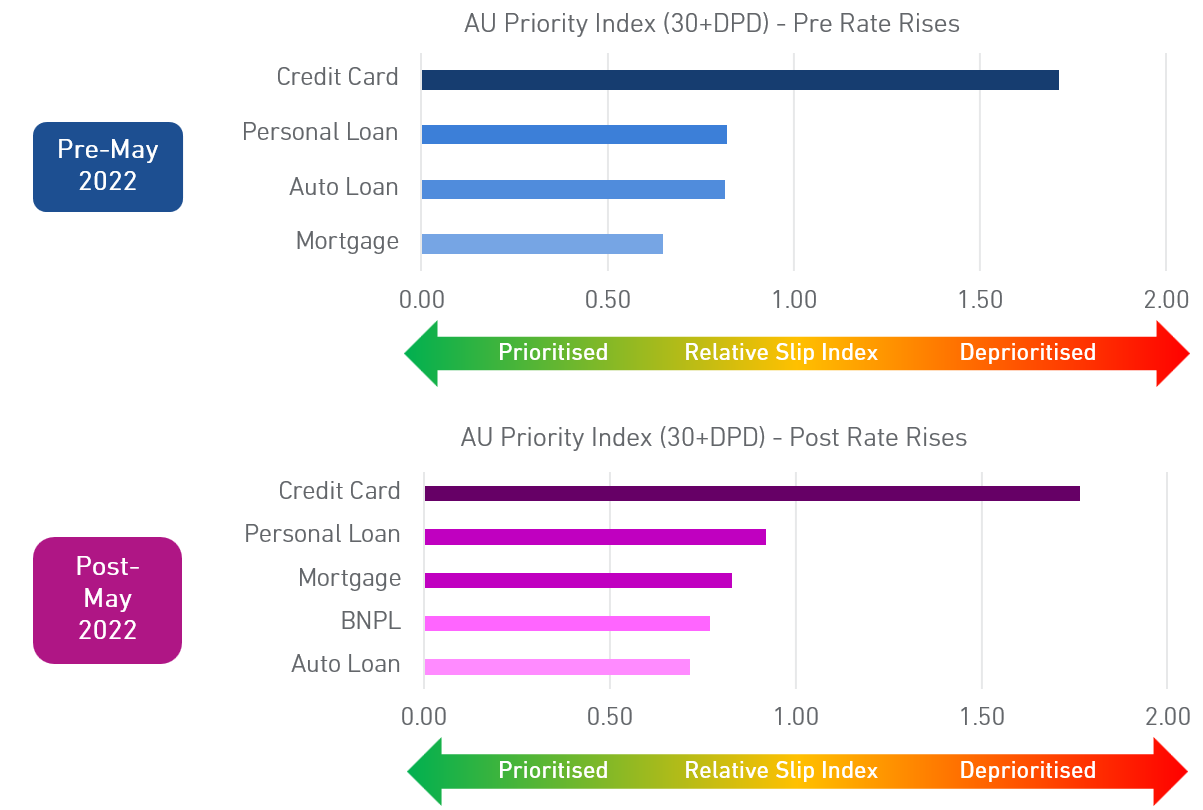
Since recent interest rate hikes, credit cards remain the most likely product to slip first. However, two notable shifts have emerged from the data: (1) mortgages are now slightly more likely to be deprioritised, and (2) auto loans have improved to become the least likely to slip.
The drop in mortgage priority likely reflects the sharp rise in repayments. Despite strong intentions to stay current, higher interest costs have made mortgages materially harder for many households to service.
By contrast, auto loans appear to be increasingly protected. Several reasons may have contributed to this shift. Access to a vehicle is essential for earning income – whether commuting to work in areas with limited public transport or operating a small business. Missing car repayments carries a high risk of repossession, which can directly threaten employment. Compared with mortgage foreclosure, the repossession process for auto loans is generally faster and more straightforward, increasing the pressure to prioritise these repayments.
Deeper distress, fewer real choices
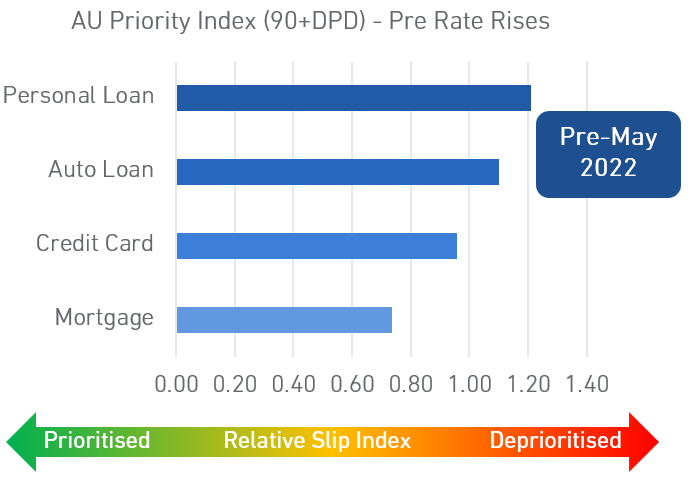
When it comes to more severe payment failure (90+ days past due), the pattern of payment prioritisation becomes less clearly defined. In the 12 months to April 2022, personal loans were the most likely to slip first to 90+DPD, with auto loans not far behind.
In times of stress, consumers may be able to scrape together their credit card’s minimum payment but may find it harder to manage larger personal or auto loan payments. Mortgages were still least likely to slip first.
Rate shock flips the script: mortgages move to the front of distress
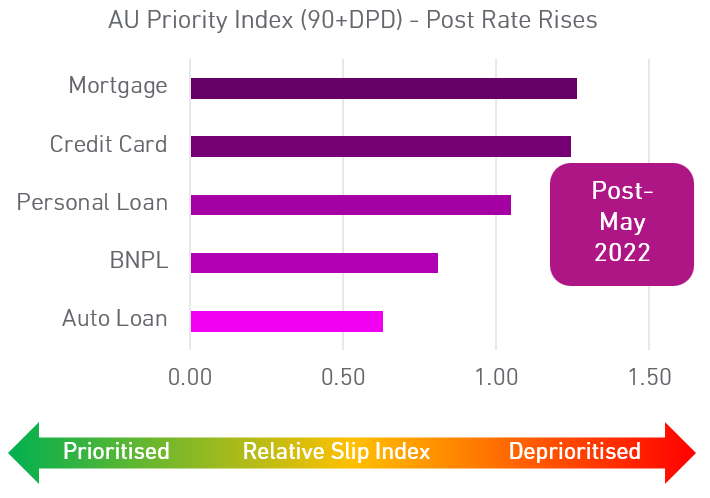 As part of unprecedented economic shifts, the latest round of rate hikes have had a profound effect.
In the 12 months to December 2025 mortgages are now on par with credit cards as the most likely to slip first to 90+DPD. The consumer data shows a preference to prioritise their car over their property, with auto loans the least likely to slip first.
After rate hikes, mortgage repayments rise sharply and is generally the largest expense. In severe stress, it is no longer about preference but capacity – it appears people simply can’t meet the repayment.
Across the Tasman, a similar pattern emerges
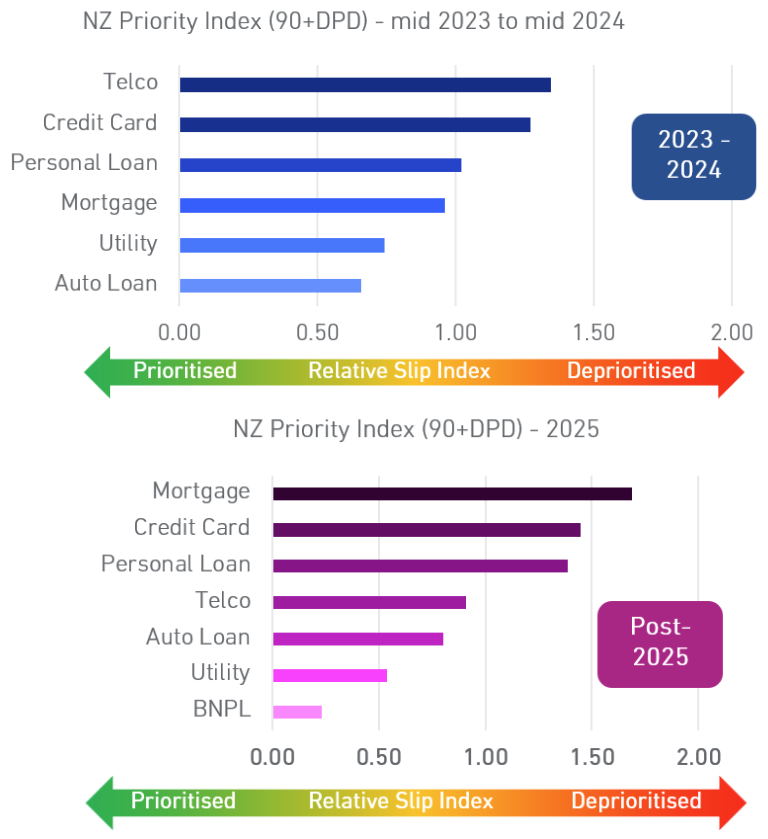 With the availability of telco and utility repayment information in New Zealand, we are able to see where these obligations sit within the payment hierarchy.
In the race to 90+DPD, telcos emerge alongside credit cards as the most likely to slip first.
As the impacts of the 2024-2025 recession and elevated unemployment take hold, New Zealanders exhibit the same shift in prioritisation observed in Australia, despite the RBNZ rate cuts – the mortgage tends to go first.
By contrast, utilities remain consistently protected and continue to rank among the highest priority payments across both time periods.
Older cohorts contributing to the mortgage shift
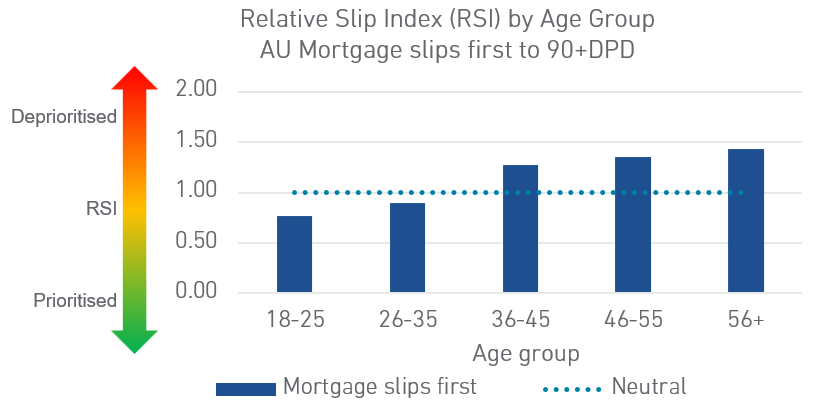
Looking more closely at the Australian cohort, it becomes clear that the deprioritisation of mortgages is driven by older consumers.
For 18–25-year-olds, mortgages are still the least likely to slip first, even after all the recent rate hikes.
Since the recent rate hikes, older consumers tend to prioritise their car over their property. In the ‘race’ to slip to 90+DPD between their mortgage and their car loan, over 55’s in the recent sample have a 75% chance of letting their mortgage slip over their auto loan. For 18- to 25-year-olds it’s 50/50 – both products are equally likely to go first.
Older cohorts in our sample are driving this shift primarily because they tend to hold greater levels of housing equity, which reduces the immediate consequences of missed mortgage payments. That equity buffer could provide confidence that short‑term arrears are manageable and unlikely to jeopardise housing security, making the mortgage a viable pressure valve when stress becomes severe.
That said, it’s important not to overgeneralise – within each age group there is significant variation. Many older borrowers carry larger and more rate‑sensitive mortgage balances, meaning rising interest rates can translate into rapid increases in repayment burden, making the home loan the most practical obligation to ease in times of pressure. By contrast, younger borrowers typically have smaller balances, resulting in more balanced trade‑offs between products and a stronger incentive to continue protecting the mortgage.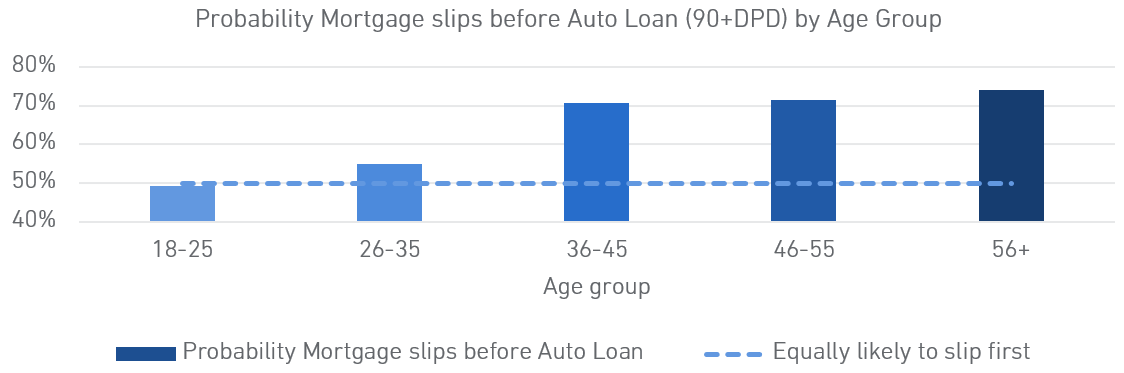
Affluence matters: How households differ under stress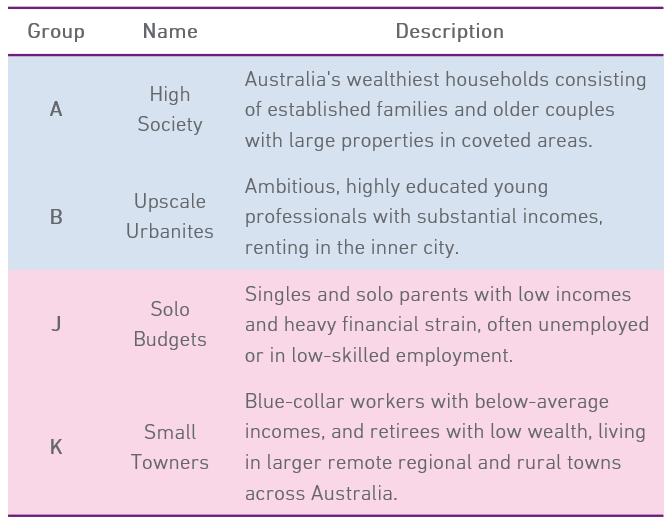
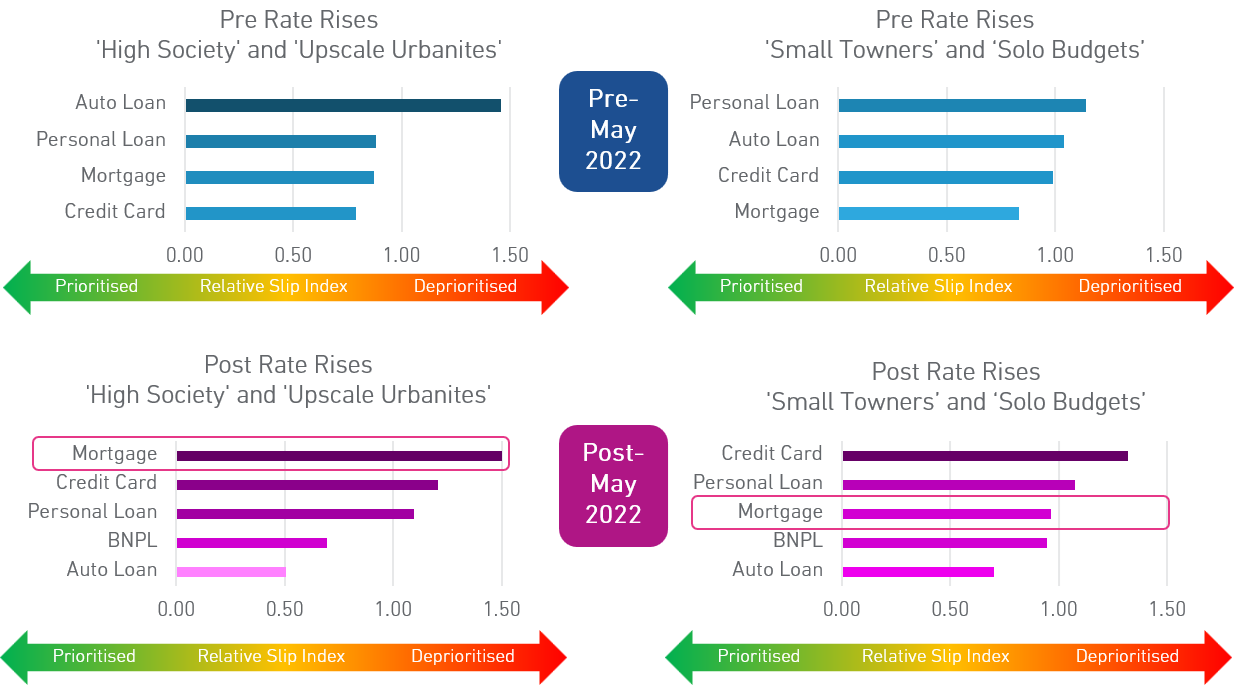
Applying Experian Mosaic groups to the Australian cohort gives us deeper insight into segmental behaviour. Consumers on opposite ends of the Mosaic spectrum prioritise products in different ways under stress. To illustrate this contrast, we compare the behaviour of higher‑affluence groups (“High Society”, “Upscale Urbanites”) with lower‑affluence groups (“Solo Budgets, “Small Towners”).
Affluent, successful, suburban households have tended to deprioritise their mortgage since the rate hikes, with mortgages most likely to slip to 90+DPD first.
Conversely, blue-collar, low-income regional or low-skilled households are far less likely to let their mortgage slip first. Post rate hikes, for this latter group their credit cards and personal loans are still more likely to slip first than their mortgage.
Bring it together
In a time when geopolitical shocks are quickly reigniting inflation and suppressing growth, the ability to interpret who is slipping, why they are doing so, and what that behaviour truly reflects becomes critical. Ultimately, the results point to a need for more dynamic, segment‑aware approaches to early warning, customer engagement and portfolio strategy.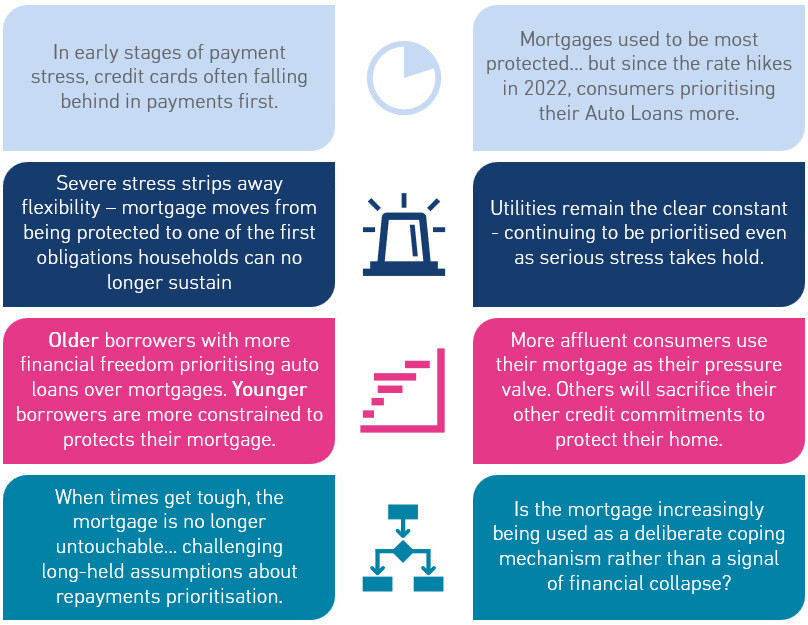
How can we help?
-
- Analysis of payment behaviour can provide additional context for interpreting customer risk profiles. Experian offers data and analytics solutions that support this type of analysis at the account and portfolio level.
- Experian Triggers surface indicators associated with changes in customer behaviour, enabling earlier visibility of potential stress signals.
- Ascend Analytical Sandbox, combined with Experian bureau data and Mosaic, supports advanced analytics and insight development to enhance understanding of emerging risk patterns.
Market insights provide our clients with a deep understanding of their competitive landscape, customer behaviour and market dynamics. By leveraging internal data, industry benchmarks, and external market intelligence, these services can help uncover trends, identify growth opportunities, and inform strategic decision-making. Turn market intelligence into competitive advantage with data-driven insights that drive growth. Contact us to find out how.
Like what you’re reading? We release the Experian Business Pulse Monthly each month and features a Spotlight topic, much like this article. To get the latest reports directly to your inbox, be sure to subscribe.
Contact Us
Disclaimer: This report is provided by Experian Australia Pty Ltd general information and it is not (and does not contain any form of) professional, legal or financial advice. Experian and its related bodies corporate make no representations, warranties or guarantees that the information (including links and the views / opinions of authors and / or contributors) contained in this report are error free, accurate or complete. You are solely responsible and liable for any decision made (or not made) by you in connection with the information contained in this report. Experian (and its related bodies corporate) exclude, to the extent permitted by law, all liability for any and all loss, cost, expense, damage or claim incurred by a party as a result of or in connection with (whether directly or indirectly) this report or any reliance on the information in this report or links contained within. Nothing in this disclaimer excludes, restricts or modifies any rights or remedies that cannot be excluded, restricted or modified under applicable law. Experian and its related entities own, or are licensed to use, the intellectual property rights in this report and its contents. Except as permitted by law, the contents of this report must not be reproduced, modified, distributed or republished without Experian’s prior written consent.
Experian and the Experian marks used herein are service marks or registered trademarks of Experian or its related entities worldwide. Other product and company names mentioned herein are the property of their respective owners.