
New Zealand Credit Risk and Fraud Summit insights series – by Josh Hodgson, Director of Enterprise and New Zealand Country Manager, Experian
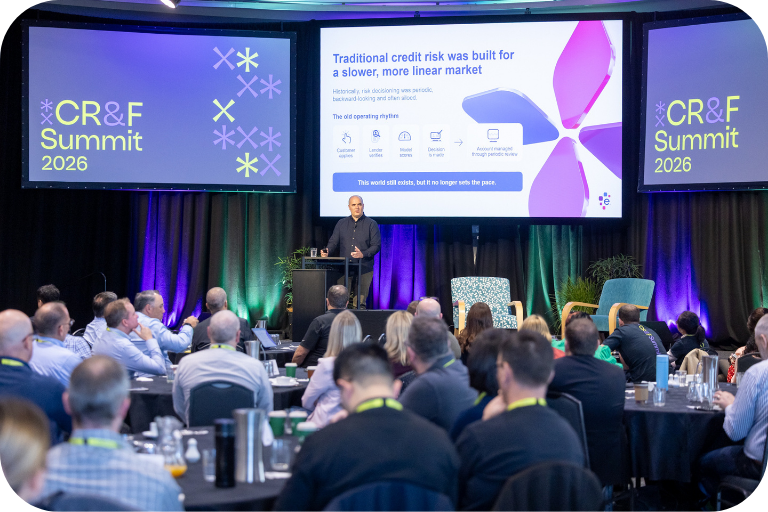 At this year’s New Zealand Credit Risk and Fraud Summit, I spoke about a topic that generated plenty of discussion: the evolution of traditional credit risk.
To be clear, I don’t mean that credit risk itself is disappearing, assessing risk will always sit at the heart of lending. What is changing is the way those decisions are made.
For decades, lenders have operated within a relatively linear model – a customer applies, identity is verified, creditworthiness is assessed, affordability is checked, a decision is made, and the account is managed over time. Those foundations remain critical, but they were built for a world that moved more slowly than the one we operate in today.
Many customers expect near-instant decisions. Fraudsters adapt in real time. Economic conditions shift quickly. Regulators expect greater transparency and explainability. At the same time, lenders have access to more data and more analytical capability than ever before.
The challenge isn’t that traditional credit risk has become irrelevant. It’s that many organisations still manage identity, fraud, affordability, credit risk and customer management as separate disciplines, supported by different systems, different teams and different decisioning processes.
Increasingly, the advantage sits with organisations that can bring these disciplines together.
From credit decisioning to intelligent decisioning
When I talk about intelligent decisioning, I’m not referring to a new product or a single technology platform. I’m talking about an operating model.
Intelligent decisioning brings together identity confidence, fraud intelligence, credit risk, affordability assessment, customer value and workflow orchestration into a connected decisioning ecosystem. Instead of making isolated decisions at different points in the customer journey, lenders can support more informed decision-making by using a broader set of signals and a more consistent view of risk.
This becomes particularly important when we look across the entire customer lifecycle.
Before a customer even applies, lenders need to identify which consumers are most likely to qualify and represent good long-term value. During onboarding, identity and fraud assessments must work seamlessly alongside credit and affordability checks to minimise both risk and customer friction.
Once a customer is on book, the opportunity to apply those signals in a more connected way continues. The same organisation that used identity, fraud and credit signals to approve a customer should also be using ongoing behavioural signals to identify growth opportunities, emerging vulnerability and changing risk profiles.
Too often, these activities sit in separate operational silos. Customers experience one journey, but organisations manage them through multiple disconnected decisioning environments.
Looking beyond a point-in-time assessment
One of the strongest themes from discussions at the summit was the growing need to understand direction, not just status. What I mean by that is that a traditional credit assessment provides a snapshot of risk at a particular point in time. Increasingly, lenders need to understand where customers are heading.
- Are they becoming more financially resilient?
- Are they showing early signs of stress?
- Are they moving into a segment that presents an opportunity for growth?
- Are fraud risks evolving around them?
Answering those questions requires a broader set of signals than traditional credit data alone.
Transaction behaviour, identity intelligence, customer engagement, bureau information and emerging indicators of financial stress can all contribute to a more complete picture. In some cases, signals of hardship can appear well before a payment is missed. The challenge is not finding those signals – it’s turning them into timely, governed and operational decisions.
This is where intelligent decisioning may help create value: by helping close the gap between insight and action.
Agility is becoming a point of difference
Perhaps the strongest message from the summit was that agility is no longer just an operational capability – it is increasingly becoming a risk capability.
Markets are becoming more fragmented. Different customer groups respond differently to economic conditions, industry pressures and market events. Broad-brush policy responses can be costly and may restrict growth opportunities alongside risk.
Lenders need the ability to identify affected customer segments quickly, understand the nature of the risk, test alternative strategies and deploy changes confidently.
In many organisations, that process can still take weeks or months. In a connected decisioning environment, it becomes a repeatable cycle of learning, testing, deployment and optimisation.
Organisations that can differentiate risk with greater precision may be better placed to identify growth opportunities while managing exposure.
My key takeaway
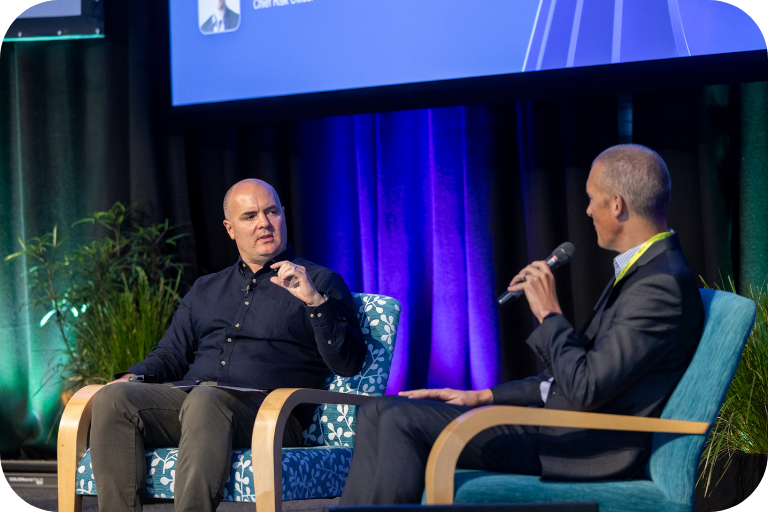
One observation stood out from conversations throughout the summit – there was clear recognition of the challenges lenders face, whether that is fraud, affordability, regulatory expectations or portfolio performance.
Where organisations differ is in their ability to connect these challenges together.
More forward-looking lenders are moving away from treating identity, fraud, credit risk and customer management as separate problems to solve. They are treating them as interconnected decisions that need to be made consistently across the customer lifecycle.
What should New Zealand lenders focus on next?
The future of lending isn’t about replacing the foundations of credit risk. It’s about connecting them.
For many organisations, three priorities stand out:
- First, develop a lifecycle view of decisioning. Valuable risk signals can emerge well before an application is submitted or a customer enters collections.
- Second, create a clear path from insight to action. New data and analytics are more likely to create greater value when they can be tested, governed, deployed and monitored efficiently.
- Finally, start now. Much of the data, technology and analytical capability needed to support more intelligent decisioning already exists. For many lenders, the opportunity is not waiting for future innovation but bringing existing capabilities together in a more connected and operational way.
The role of standalone credit risk is changing. Organisations that can combine identity, fraud, affordability, customer value and risk intelligence into a more connected decisioning ecosystem may be better placed to respond as markets continue to change.
To find out how Experian is supporting this shift, please get in contact through the form below.